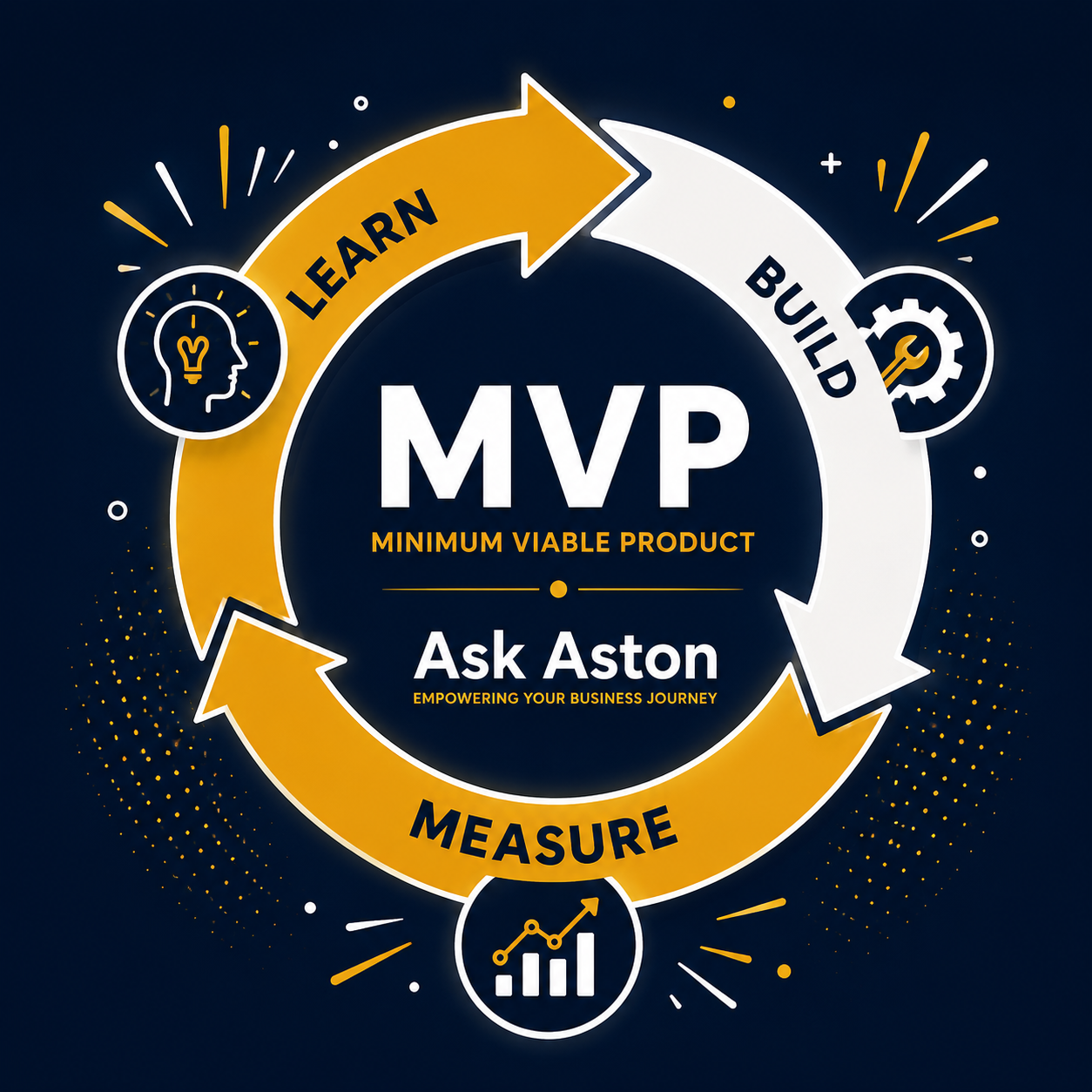
Many first-time entrepreneurs believe they need a fully developed product with every possible feature before launching their business. In reality, some of the most successful companies started with a much simpler approach known as a Minimum Viable Product, or MVP.
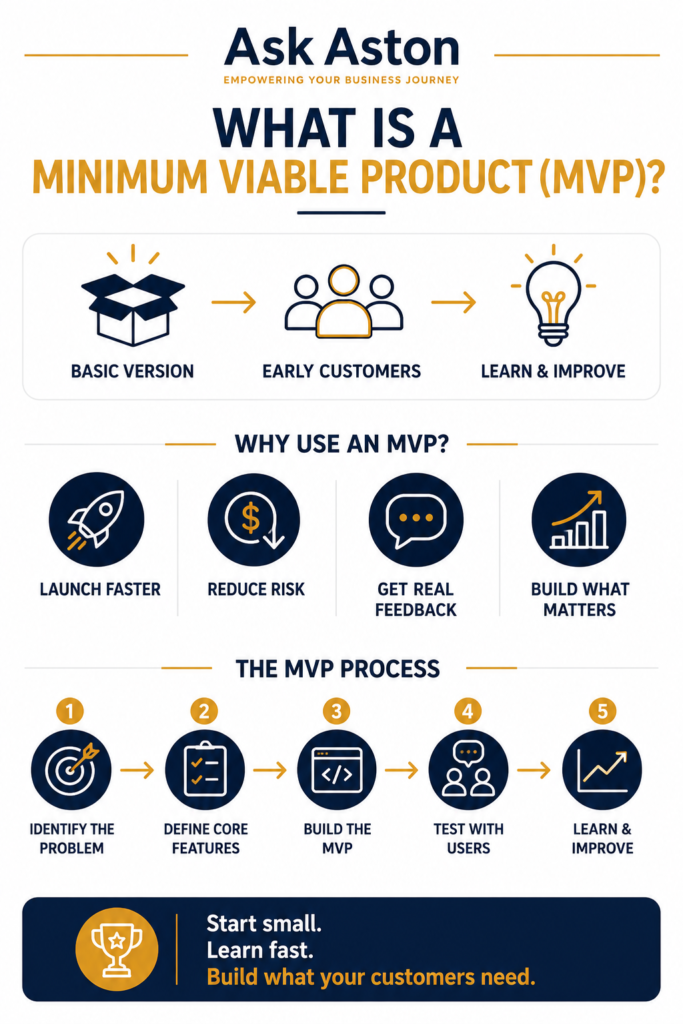
An MVP is a basic version of a product that includes only the essential features needed to solve a specific problem for early customers. The goal is not perfection. The goal is to test your idea, gather feedback, and learn what customers actually want before investing significant time and money.
For startups and small businesses, creating an MVP can reduce risk and help validate a business idea before making larger investments. Read here to learn more about validating a business idea.
Understanding the Purpose of an MVP
A Minimum Viable Product allows entrepreneurs to launch quickly and begin learning from real customers. Instead of spending months or years developing a product based on assumptions, an MVP helps you test whether people are willing to use, buy, or engage with your solution.
The key advantage of an MVP is that it provides real-world feedback. Customers often reveal needs, preferences, and challenges that entrepreneurs may not have anticipated during the planning stage.
By launching early, business owners can make informed decisions based on actual customer behavior rather than guesswork.
What Makes a Product “Viable”?
The word “viable” is important. An MVP is not a rough prototype that barely works. It should provide enough value to solve a meaningful problem for customers.
For example, if you are creating a budgeting app, the MVP may only include basic expense tracking and reporting features. It does not need advanced forecasting tools, integrations, or premium customization options right away.
The product should be functional, useful, and capable of delivering its core benefit. Everything else can be added later based on customer feedback and demand.
Why Entrepreneurs Should Start Small
Many startups fail because they spend too much time and money building features that customers do not actually need.
Starting with an MVP allows entrepreneurs to focus on the most important problem they are solving. This approach often leads to faster launches, lower development costs, and better decision-making.
Launching a simple version also helps identify whether customers are willing to pay for the solution. If the market response is positive, you can confidently invest in expanding the product.
If the response is weak, you can adjust your strategy before committing additional resources.
Examples of MVPs
An MVP can take many different forms depending on the business model.
- For a software company, an MVP may be a simple application with one primary feature.
- For an e-commerce business, it could be a basic online store offering a small selection of products.
- For a service-based business, an MVP may involve manually delivering services before investing in automation or complex systems.
Even a landing page that collects email addresses and measures interest can serve as an MVP when testing demand for a new product or business idea.
The format matters less than the ability to learn from real customer interactions. Read this if you want more specific examples of MVPs.
How to Build an MVP
The first step is identifying the primary problem your business solves. Focus on the single most important benefit customers are seeking.
Next, determine the minimum set of features required to deliver that benefit. Resist the temptation to include every idea you have.
After launching your MVP, actively gather feedback from customers. Ask questions, monitor usage patterns, and pay attention to recurring requests or complaints.
Use this information to improve the product over time. Successful entrepreneurs view the MVP as the beginning of the learning process rather than the final version of the product.
Common MVP Mistakes
One common mistake is building too many features before launch. Entrepreneurs often assume more features will attract more customers, but excessive complexity can delay progress and increase costs.
Another mistake is ignoring customer feedback. The value of an MVP comes from learning. If you launch but fail to listen to customers, you miss the opportunity to improve. You might find this article about how to find customers useful.
Finally, some entrepreneurs wait too long to launch because they want everything to be perfect. Perfection can become an obstacle to progress. An MVP is meant to help you learn quickly and improve continuously.
Test Before You Invest
A Minimum Viable Product is one of the most effective tools for reducing startup risk. By focusing on core functionality, launching early, and learning from customers, entrepreneurs can make smarter decisions and build products that better meet market demand.
Remember, your first version does not need to be perfect. It simply needs to provide value and help you learn. Many successful businesses started with a simple MVP and evolved over time based on customer feedback.
Need help validating your business idea and planning your MVP?
Try Ask Aston to brainstorm ideas, validate opportunities, create business plans, and get step-by-step guidance tailored to your goals.