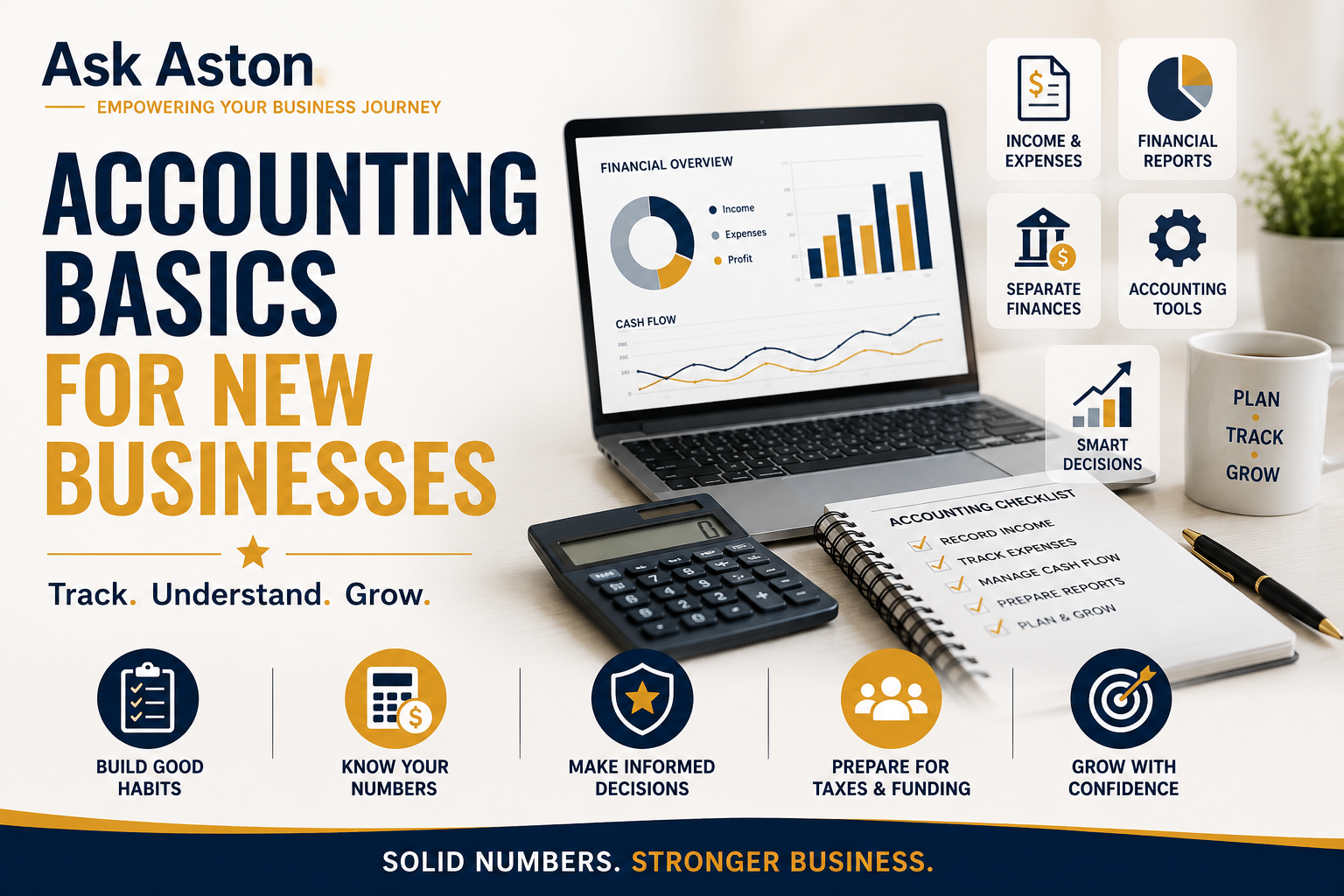
Starting a business involves more than creating a great product or finding your first customers. You also need to understand how money moves through your company. Accounting helps you track income, control expenses, and make smarter decisions as your business grows.
Many new entrepreneurs feel overwhelmed by accounting because they think it requires advanced financial knowledge. However, the basics are easier to understand than they may seem. With a few simple systems in place, you can build strong financial habits from the beginning.
Why Accounting Matters for New Entrepreneurs
Accounting gives you a clear picture of your business’s financial health. Without accurate records, you may not know if your company is making money or losing it. You could also miss important expenses, underestimate costs, or make decisions based on incomplete information.
Additionally, good accounting helps you prepare for taxes, apply for funding, and communicate with lenders or investors. When your financial records are organized, you can spend less time searching for information and more time focusing on growing your business.
For first-time founders, accounting is not about becoming a financial expert. Instead, it is about understanding the numbers that guide your business.
Understand Your Business Income and Expenses
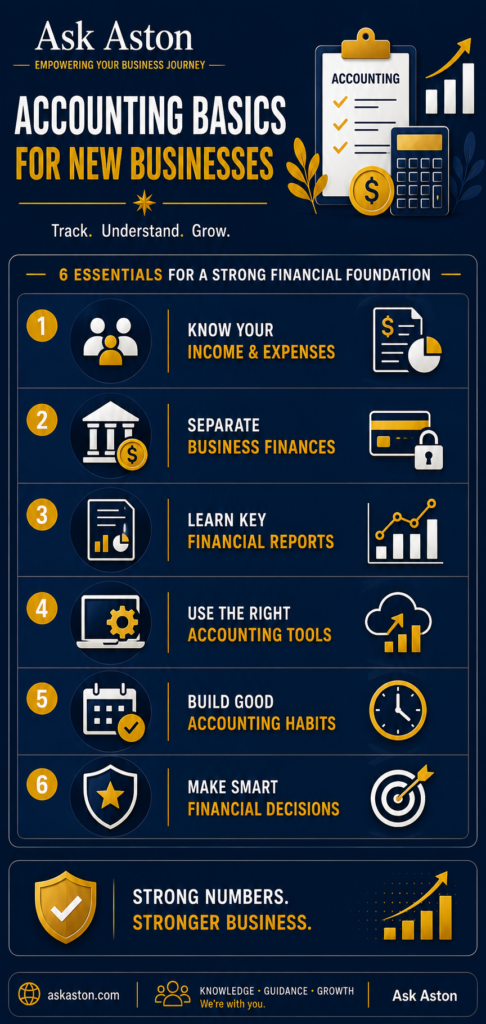
The foundation of accounting is tracking money coming in and money going out. Revenue refers to the money your business earns from selling products or services. Expenses include the costs required to operate your company, such as supplies, software, marketing, rent, and payroll.
To understand your performance, you need to compare your income and expenses regularly. If your revenue is higher than your expenses, your business is generating a profit. If your expenses exceed your income, you may need to adjust your pricing, reduce costs, or increase sales.
Therefore, keeping detailed records of every transaction is one of the most important habits you can develop as a business owner.
Separate Personal and Business Finances
One of the most common mistakes new entrepreneurs make is mixing personal and business money. Although it may seem easier at first, combining accounts can create problems later.
Opening a separate business bank account helps you track company activity more accurately. It also makes tax preparation easier and gives your business a more professional foundation. For more information on creating a business bank account, click on the linked article.
Furthermore, separating finances helps you understand how much money your business actually earns. This information allows you to make better choices about spending, hiring, and future investments.
Learn the Basic Financial Reports
You do not need to become an accountant, but you should understand a few key financial reports. These reports help you measure progress and identify potential problems.
An income statement shows your revenue, expenses, and profit over a specific period. A balance sheet shows what your business owns, what it owes, and the value of the company. A cash flow statement tracks money moving in and out of your business.
Together, these reports provide a complete view of your financial position. By reviewing them regularly, you can spot trends and make decisions before small issues become major challenges.
Choose the Right Accounting Tools
Today, many accounting tools make financial management easier for small business owners. Software can help track expenses, send invoices, organize receipts, and prepare reports.
However, the best tool depends on your business needs. Some entrepreneurs start with simple spreadsheets, while others choose dedicated accounting software from the beginning. The important thing is to create a consistent system and maintain accurate records. Check out the SBA’s article on managing your business finances for more information on accounting tools.
As your business grows, your accounting needs may become more complex. At that point, working with a professional accountant can help you manage taxes, financial planning, and long-term strategy.
Build Good Accounting Habits Early
Strong accounting habits create a stronger business foundation. Set aside time each week to review transactions, update records, and check your financial progress. Waiting until tax season often creates unnecessary stress and confusion.
Most importantly, remember that accounting is a tool to help you succeed. Your financial information tells the story of your business and helps you understand what is working and what needs improvement.
Need help with accounting for your business?
Try Ask Aston to brainstorm ideas, validate opportunities, create business plans, and get step-by-step guidance tailored to your goals.