
One of the most common questions new entrepreneurs ask is whether they need a business bank account. While it may seem easier to use a personal account when you’re just getting started, opening a dedicated business bank account is often one of the smartest financial decisions you can make.
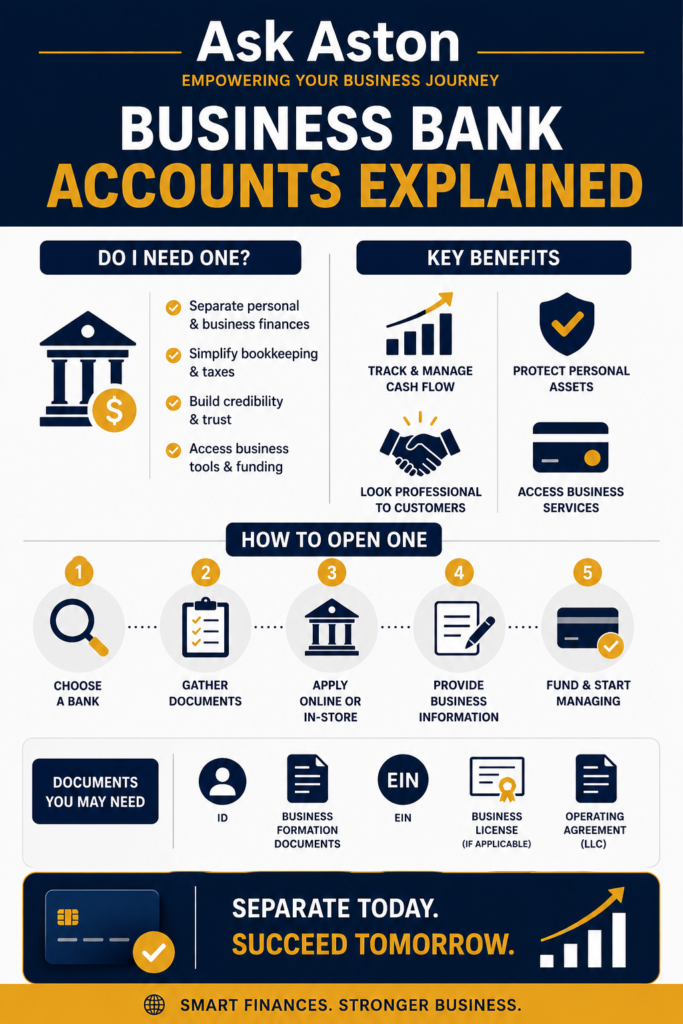
A business bank account helps separate your personal and business finances, simplifies bookkeeping, and presents a more professional image to customers and vendors. Understanding when you need one and how to open one can help you build a stronger foundation for your business.
Do You Need a Business Bank Account?
In some cases, a business bank account is not legally required. For example, sole proprietors can often operate using a personal account. However, that does not mean it is a good idea.
Mixing personal and business finances can quickly create confusion. It becomes more difficult to track expenses, manage cash flow, prepare taxes, and understand how your business is performing financially.
If you operate as an LLC or corporation, maintaining separate business finances is especially important. Keeping business and personal funds separate helps support the legal protections those business structures provide. Read this article for more information on registering and LLC.
For most entrepreneurs, opening a business bank account is a simple step that can save time and reduce stress later.
Benefits of a Business Bank Account
A dedicated business account offers several advantages beyond organization.
First, it creates a clear record of all business income and expenses. This makes bookkeeping easier and can simplify tax preparation at the end of the year.
Second, it helps build credibility. Customers and clients often feel more comfortable making payments to a business account rather than a personal account.
Third, many banks offer business-specific services such as merchant processing, payroll tools, business credit cards, and lending options that can support future growth.
Having a separate account also makes it easier to monitor cash flow and evaluate the financial health of your business.
When Should You Open One?
Ideally, you should open a business bank account as soon as your business is registered and ready to begin accepting payments.
Many entrepreneurs wait until revenue starts coming in, but establishing separate finances from the beginning helps create good habits and prevents accounting issues later.
Opening an account early also ensures you are prepared to receive customer payments, pay expenses, and manage your finances professionally from day one.
How to Open a Business Bank Account
Opening a business bank account is often a straightforward process. Most banks allow you to begin the application online or visit a local branch.
The first step is choosing a bank that offers services aligned with your business needs. Compare account fees, transaction limits, online banking features, customer service, and additional business tools.
Once you’ve selected a bank, you’ll need to gather the required documentation.
Documents You May Need
The exact requirements vary by bank and business structure, but most financial institutions will request several common documents.
These may include:
- Personal identification
- Business formation documents
- Employer Identification Number (EIN)
- Business license, if applicable
- Operating agreement for an LLC
Having these documents prepared in advance can make the account opening process much faster.
If you are a sole proprietor, requirements may be simpler, but you may still need documentation showing your business name and activities.
Choosing the Right Account
Not all business bank accounts are the same. Some are designed for startups and small businesses, while others are intended for larger companies with higher transaction volumes.
Look for an account that matches your current needs while allowing room for future growth.
Pay attention to monthly fees, minimum balance requirements, ATM access, mobile banking features, and integration with accounting software. These details can make a significant difference in your day-to-day operations.
Many banks also offer introductory promotions for new business customers, which may provide additional value when opening an account.
Build a Strong Financial Foundation
A business bank account is more than just a place to store money. It is an important tool for managing your finances, maintaining accurate records, and operating professionally.
By separating personal and business finances, you can simplify accounting, improve organization, and better understand the financial performance of your company.
Whether you’re launching a side business or building a full-time company, opening a business bank account early can help create a strong financial foundation for future growth.
If you want more information about opening this topic, check out Small Business Administration’s article on opening a business bank account.
Need help navigating the startup process?
Try Ask Aston to brainstorm ideas, validate opportunities, create business plans, and get step-by-step guidance tailored to your goals.