
One of the biggest mistakes new entrepreneurs make is investing time and money into a business idea before confirming that people actually want it. Validating your business idea helps reduce risk and gives you confidence before you launch.
What is the Problem You Are Solving?
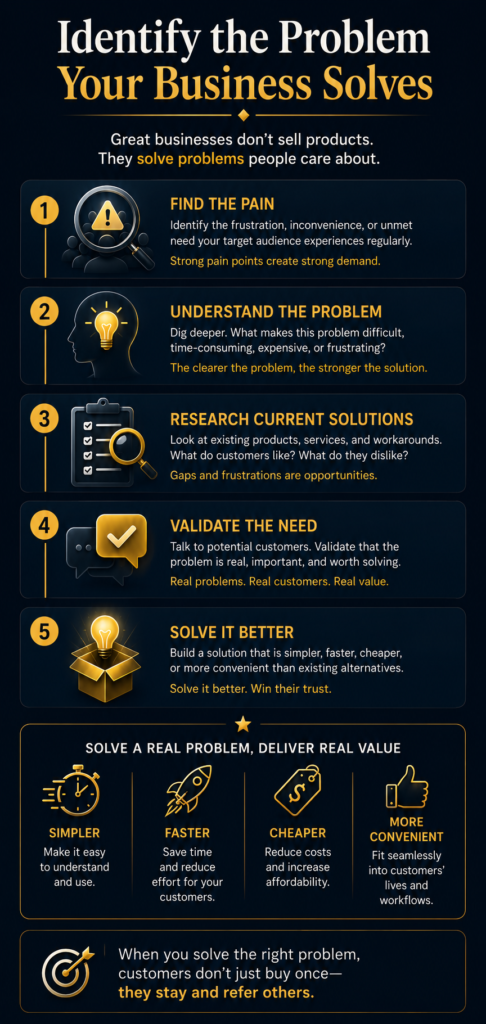
The first step is identifying the specific problem your business solves. A strong business idea addresses a real frustration, inconvenience, or unmet need. If the problem is unclear, customers are unlikely to pay for the solution.
Every successful business starts by solving a specific problem. Before investing time or money into your idea, you should clearly understand what frustration, inconvenience, or unmet need your business addresses. If the problem is unclear or unimportant, customers are unlikely to pay for the solution.
Research Your Market and Competitors
Next, research your market. Look at competitors, customer reviews, Reddit discussions, and social media conversations. Pay attention to what people complain about and what existing businesses are missing. Competition is not necessarily bad — it often proves there is demand. Click here for more information on market research and competitive analysis.
Talk Directly to Potential Customers
Talking directly to potential customers is one of the most effective ways to validate an idea. Ask open-ended questions about their challenges and current solutions. Try to understand their behavior rather than simply asking if they would buy your product.
Test Demand Before Building Your Business
You can also test interest before fully building your business. Create a simple landing page, collect email signups, or run small social media ads to measure demand. If nobody clicks, signs up, or responds, that feedback is valuable.
How to Know if Your Business Idea Has Potential
A business idea has potential when it solves a real problem that people actively want fixed. One of the strongest signs of demand is when potential customers already spend money on similar products or services. If people are searching for solutions, discussing frustrations online, or looking for better alternatives, there may be an opportunity for your business.
Another important sign is customer interest. If people ask questions, join a waitlist, sign up for updates, or respond positively to your idea, that feedback can indicate real demand. Even small levels of engagement can help validate whether your concept is worth pursuing.
You should also evaluate whether your business idea can realistically make money. Consider how large the market is, how much customers may be willing to pay, and whether your business can stand out from competitors. A strong business idea does not need to be completely unique, but it should offer a clear value or improvement.
The best way to know if your business idea has potential is to test it quickly, gather feedback, and pay attention to how real people respond.
Why Validation Saves Time and Money
Validation is about learning quickly and cheaply. The goal is not perfection. The goal is to determine whether your idea solves a problem people care about enough to spend money on.
Need help validating your business idea? Try Ask Aston to research markets, analyze opportunities, and refine your business concept
before you launch.