
Every successful business starts with a good idea, but ideas alone rarely lead to lasting success. A clear plan gives your business direction and helps you make better decisions from day one. It also keeps you focused when challenges arise and opportunities appear.
Many first-time entrepreneurs believe planning slows them down. In reality, good planning helps you move faster because you know where you are going and how you will get there. Instead of reacting to every new idea, you can make decisions that support your long-term goals.
By understanding a few planning basics, you can build a stronger foundation for your business and increase your chances of success.
Start with a Clear Vision
Every business should begin with a simple vision. Ask yourself what you want your company to become and why it exists. Your vision does not need to be complicated. Instead, it should provide a clear picture of your future and guide your decisions.
Next, define your mission. While your vision focuses on the future, your mission explains what your business does today and who it serves. Together, these statements help you stay focused as your business grows.
As new opportunities arise, your vision and mission will help you determine which ones support your long-term goals.
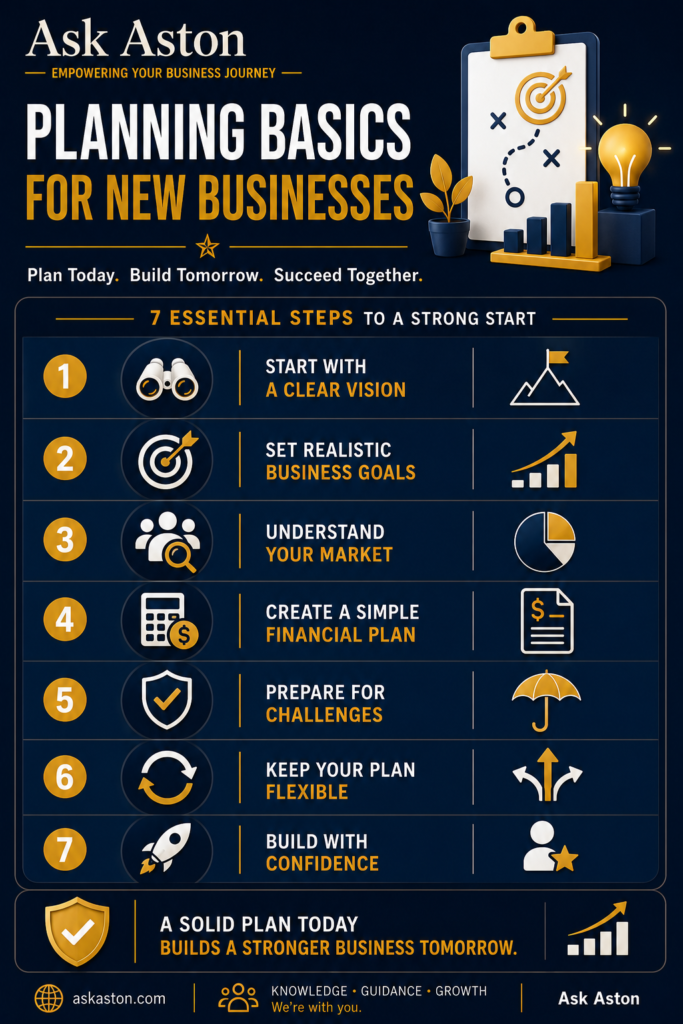
Set Realistic Business Goals
Once you know where you want to go, you need goals that move your business forward. Large goals often feel overwhelming, so break them into smaller milestones that you can accomplish over time.
For example, instead of focusing only on becoming profitable, set goals such as launching your website, gaining your first ten customers, or reaching a monthly sales target. These smaller achievements create momentum and help you measure progress.
Furthermore, review your goals regularly. As your business grows, you may discover new opportunities or adjust your priorities. To read more about setting business goals that work, click the linked article.
Understand Your Market
Planning without understanding your market is like driving without a map. Before investing significant time or money, learn about your potential customers and competitors. To learn more about analyzing the market, check out this article.
Start by identifying who your ideal customers are. Then explore their needs, buying habits, and challenges. At the same time, study businesses that already serve your market. Look for gaps you can fill or ways to provide greater value.
As a result, your products, services, and marketing efforts will better match customer expectations.
Create a Simple Financial Plan
Every business needs a basic financial plan. Even if your company is small, you should estimate your startup costs, monthly expenses, expected revenue, and cash flow. Check out this other Ask Aston article for more details about business financial management basics for new businesses.
Knowing your numbers helps you avoid unpleasant surprises. It also allows you to make smarter decisions about spending and growth.
Additionally, build a financial cushion whenever possible. Unexpected expenses are common during the early stages of a business, and having reserve funds can help you stay on track.
Remember that your financial plan should change as your business develops. Review it often and update your projections using real business data.
Prepare for Challenges
No business grows without obstacles. Markets change, customer preferences shift, and unexpected expenses can appear at any time. Rather than hoping everything goes perfectly, prepare for setbacks before they happen.
Think about potential risks and consider how you would respond. For example, identify backup suppliers, create emergency savings, or develop alternative marketing strategies.
Planning for challenges does not mean expecting failure. Instead, it allows you to respond with confidence when problems arise.
Keep Your Plan Flexible
A business plan should guide your decisions, not limit them. As you gain experience, you will learn more about your customers, products, and market. Because of that, your plan should evolve along with your business.
Review your progress every few months. Celebrate what is working and make adjustments where needed. Small improvements made consistently often produce better results than waiting for the perfect strategy.
Most successful entrepreneurs continue planning throughout the life of their businesses. They learn, adapt, and improve as new opportunities emerge.
Build with Confidence
Planning is one of the most valuable investments you can make as a new entrepreneur. A clear vision, realistic goals, market research, and financial planning provide the structure needed to build a successful business.
Need help with business planning?
Try Ask Aston to brainstorm ideas, validate opportunities, create business plans, and get step-by-step guidance tailored to your goals.