
Choosing the right business structure is one of the most important decisions you will make when starting a business. Your structure affects taxes, liability protection, paperwork requirements, and how your company operates long term. While the process may seem overwhelming at first, understanding the basics can help you make a confident decision.
For many first-time entrepreneurs, the best approach is to choose a structure that matches both your current goals and your future growth plans.
Why Your Business Structure Matters
Your business structure determines how your business is legally organized. It impacts how you pay taxes, whether your personal assets are protected, how much paperwork you must file, how profits are distributed, and whether you can bring on investors or partners
The right structure can provide flexibility and protection as your business grows.
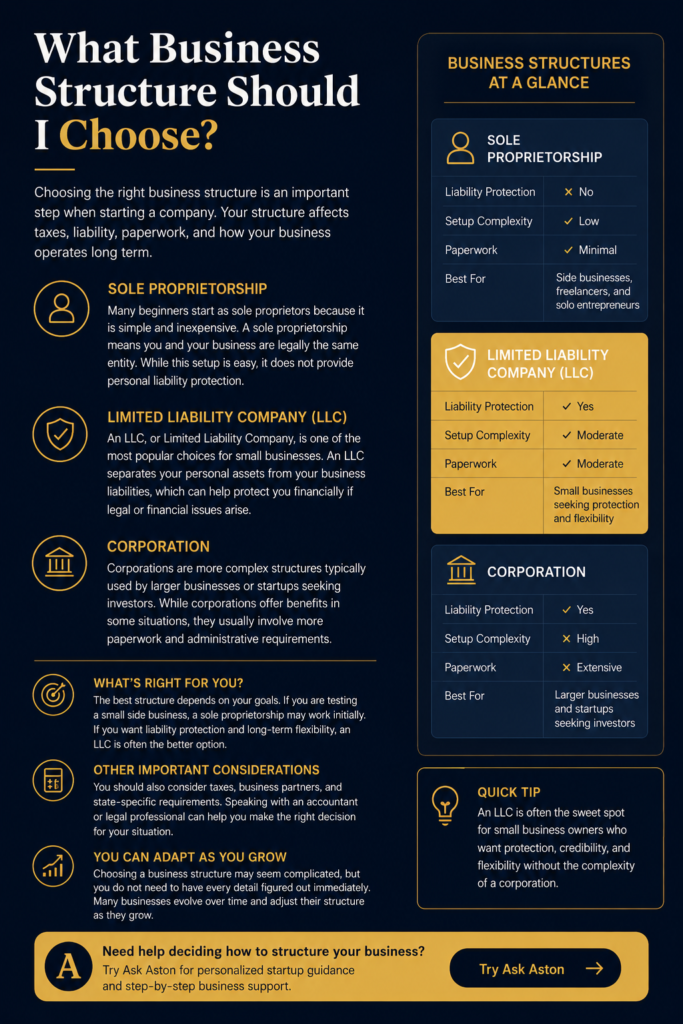
Sole Proprietorship: The Simplest Option
A sole proprietorship is the easiest and least expensive business structure to start. In this setup, you and your business are legally considered the same entity.
Many freelancers, consultants, and small side businesses begin this way because there are very few startup requirements. In many states, you can begin operating immediately without formally registering a business entity.
Pros of a Sole Proprietorship
-
- Simple setup process, low startup costs, minimal paperwork, full control over business decisions, and easy tax filing.
Cons of a Sole Proprietorship
-
- No personal liability protection, personal assets may be at risk, harder to raise funding, and less credibility with some customers or lenders.
If your business is still in the testing phase or generating smaller amounts of revenue, a sole proprietorship may be a practical starting point.
LLC: A Popular Choice for Small Businesses
An LLC, or Limited Liability Company, is one of the most common business structures for entrepreneurs and small business owners.
An LLC separates your personal finances from your business liabilities. This means your personal assets, such as your home or personal bank account, are generally protected if your business faces legal or financial problems.
LLCs are popular because they combine liability protection with relatively simple management and flexible tax options.
Benefits of an LLC
-
- Personal liability protection, flexible tax treatment, professional credibility, easier separation of personal and business finances, and fewer formalities than corporations.
Potential Drawbacks
-
- State filing fees, annual reporting requirements, and additional administrative responsibilities.
For many entrepreneurs launching a serious long-term business, an LLC is often the ideal balance between protection and simplicity.
Corporations: Best for Larger Growth Plans
Corporations are more advanced business structures commonly used by larger companies, startups seeking investors, or businesses planning significant expansion.
A corporation is legally separate from its owners and can continue existing independently of the founders.
There are different types of corporations, including S Corporations and C Corporations, each with unique tax rules and ownership structures.
Advantages of a Corporation
-
- Strong liability protection, easier to attract investors, ability to issue stock, and long-term growth potential.
Disadvantages of a Corporation
-
- More paperwork and regulations, higher setup and maintenance costs, more complex tax requirements, and ongoing corporate formalities.
Corporations can be an excellent option for high-growth businesses, but they often require more administrative effort.
Which Business Structure Is Best?
The best business structure depends on your goals, risk level, industry, and future plans.
Here is a simple way to think about it:
-
- Testing a small side hustle? A sole proprietorship may work initially.
-
- Want liability protection and flexibility? An LLC is often the best choice.
- Planning to raise investment capital or scale aggressively? A corporation may make sense.
Speaking with an accountant or attorney can help you make the best decision for your unique situation.
Your Business Can Evolve Over Time
One important thing to remember is that your first structure does not have to be permanent.
Many businesses begin as sole proprietorships and later transition into LLCs or corporations as they grow. Your structure can evolve as your revenue increases, your risk changes, and your goals become more defined.
The key is getting started and choosing the option that best supports your current stage.
Final Thoughts
Choosing a business structure may feel complicated, but you do not need to have every detail figured out immediately. The right structure should support your goals while giving you room to grow.
Starting simple is often better than waiting for the “perfect” setup.
Need help deciding how to structure your business?
Try Ask Aston for personalized startup guidance, business planning support, and step-by-step help building your business with confidence.