
One of the most common questions new entrepreneurs ask is how much money they actually need to start a business. The truth is that startup costs vary widely depending on the type of business you want to build, your industry, and how quickly you want to grow.
The good news is that many modern businesses can be started with far less money than most people expect.
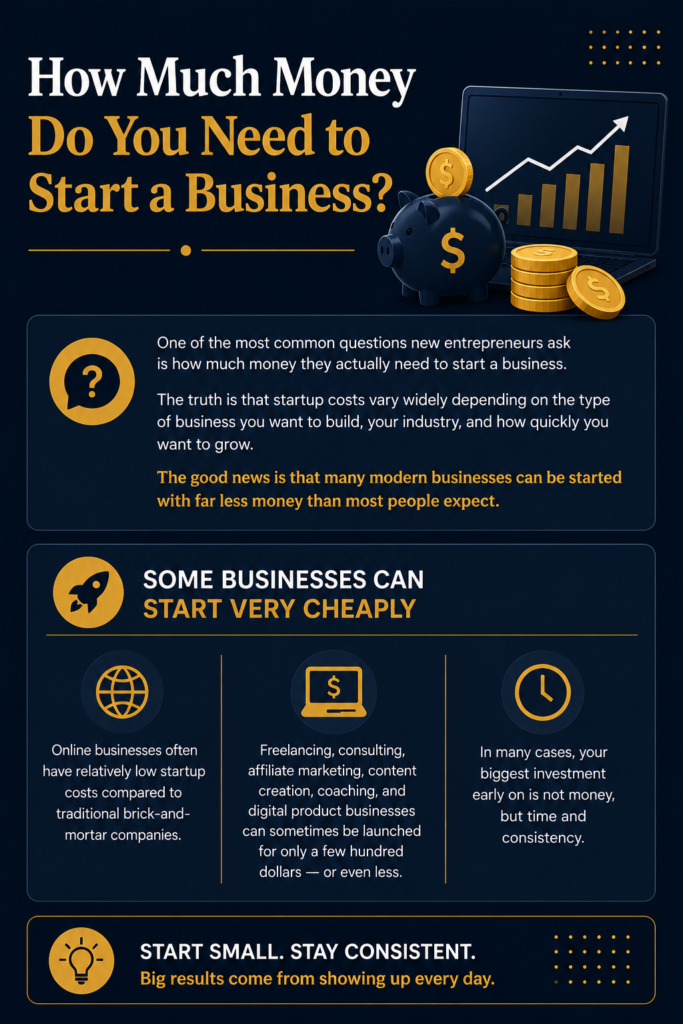
Some Businesses Can Start Very Cheaply
Online businesses often have relatively low startup costs compared to traditional brick-and-mortar companies.
Freelancing, consulting, affiliate marketing, content creation, coaching, and digital product businesses can sometimes be launched for only a few hundred dollars — or even less. In many cases, your biggest investment early on is not money, but time and consistency. For many entrepreneurs, starting lean is actually an advantage because it reduces risk and keeps the focus on validating demand first.
Traditional Businesses Usually Cost More
More traditional businesses typically require larger upfront investments before opening.
Retail stores, restaurants, service companies with physical locations, and product-based businesses often involve extra expenses, such as inventory, equipment, and commercial space. Depending on the industry, these businesses may require thousands — or even tens of thousands — of dollars to launch properly.
That does not mean they are impossible to start, but careful planning becomes much more important.
Focus on Essential Startup Costs First
One of the biggest mistakes new entrepreneurs make is overspending too early.
Many people try to build the “perfect” business immediately instead of starting with the essentials and improving over time.
A better approach is to focus only on what you truly need to begin operating and serving customers.
Common Startup Expenses
Here are some of the most common startup costs for small businesses:
Business Registration and Licenses
Depending on your state and industry, you may need to register your business or apply for permits and licenses.
Website and Domain Name
Most modern businesses benefit from having an online presence, even if they primarily operate locally.
Marketing and Advertising
You may need to budget for social media ads, SEO, branding, content creation, or promotional materials.
Software and Equipment
This can include laptops, cameras, design software, accounting tools, or industry-specific equipment.
Insurance and Legal Fees
Some businesses require insurance coverage or legal assistance during setup.
Start Simple and Improve Over Time
Keeping costs low in the beginning gives you flexibility and reduces financial pressure.
Many successful businesses started with a basic website, a simple service offering, minimal branding, and mall marketing budgets. Progress matters far more than perfection in the early stages.
Separate Business and Personal Finances Early
Even if your business is small, separating your finances early can save major headaches later.
Opening a dedicated business bank account can help you track expenses more easily, stay organized for taxes, look more professional, and understand your profitability. Many entrepreneurs wait too long to organize their finances properly, which often creates confusion later.
You Do Not Always Need Investors
Many people assume they need investors or large business loans to start a company.
In reality, many profitable businesses are built gradually through “bootstrapping,” which means growing the company using personal savings and reinvesting revenue back into the business.
Starting smaller often allows entrepreneurs to maintain ownership, reduce financial risk, and learn the market gradually. The key is starting with a realistic plan and controlling unnecessary expenses.
Final Thoughts
The amount of money needed to start a business depends entirely on your goals and business model.
Some businesses can launch for a few hundred dollars, while others may require significant capital. The most important thing is understanding your essential expenses and starting as lean as possible.
You do not need a perfect setup to begin. Many successful companies started small and improved over time.
Need help estimating startup costs or planning your business finances?
Try Ask Aston for personalized startup guidance, budgeting help, and step-by-step business planning support.