
Many people dream about starting a business. The idea of being your own boss, creating something meaningful, and building financial independence can be very appealing. However, entrepreneurship is not the right path for everyone. Before launching a business, it is important to understand both the opportunities and challenges that come with being an entrepreneur.
The good news is that entrepreneurship is not reserved for a special type of person. Successful business owners come from many different backgrounds, industries, and experience levels. The key is understanding whether the entrepreneurial lifestyle aligns with your goals, personality, and willingness to learn.
Understanding What Entrepreneurship Really Means
Entrepreneurship is more than owning a business. It involves identifying opportunities, solving problems, taking calculated risks, and creating value for customers.
Many people imagine entrepreneurship as having complete freedom, but the reality is often different, especially in the early stages. New business owners frequently work long hours, wear multiple hats, and handle everything from marketing and sales to customer service and finances.
While entrepreneurship can eventually provide flexibility and independence, it usually requires significant effort and commitment before reaching that point.
Do You Enjoy Solving Problems?
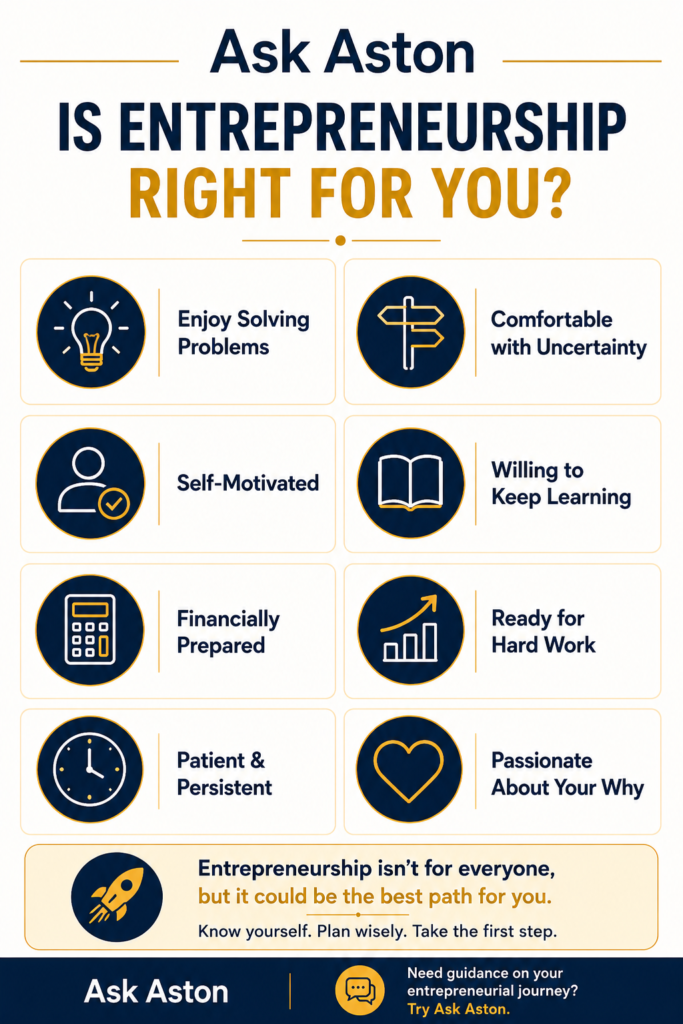
One of the most important traits of successful entrepreneurs is a willingness to solve problems. Businesses exist because they help customers overcome challenges or achieve goals.
As a business owner, you will face obstacles regularly. Customers may have concerns, technology may fail, marketing campaigns may underperform, and unexpected expenses may arise.
People who enjoy finding solutions and adapting to new situations often thrive in entrepreneurship because they view challenges as opportunities rather than roadblocks.
Are You Comfortable With Uncertainty?
Traditional employment often provides predictable paychecks, benefits, and defined responsibilities. Entrepreneurship can be much less predictable.
Revenue may fluctuate from month to month. Some business ideas work immediately, while others require adjustments before gaining traction. Success rarely follows a straight line.
Being comfortable with uncertainty does not mean enjoying risk for its own sake. It means being able to make decisions with incomplete information and continuing to move forward despite not knowing exactly how everything will unfold.
Build Consistent Habits
As your business grows, focus on building consistent habits. Successful entrepreneurs spend time learning marketing, sales, customer service, and financial basics. You do not need to master everything at once. Experience comes from taking action and adjusting along the way.
Can You Stay Motivated Without Supervision?
Entrepreneurs are responsible for managing their own time and priorities. There is no manager assigning daily tasks or monitoring progress.
This level of independence can be exciting, but it also requires self-discipline. Business owners must consistently work toward long-term goals, even when results are not immediate.
If you are naturally self-motivated and capable of staying focused without constant accountability, entrepreneurship may be a good fit. Read more information on the self-discipline needed to be an entrepreneur here.
Are You Willing to Learn New Skills?
Few entrepreneurs start with expertise in every area of business. Most learn as they go.
Running a business often requires learning about marketing, sales, budgeting, customer service, operations, and technology. The most successful entrepreneurs are usually lifelong learners who remain curious and open to improvement.
You do not need to know everything before starting. However, you should be willing to continuously develop new skills and adapt to changing circumstances.
Financial Planning Matters
Entrepreneurship can create significant financial opportunities, but it often requires patience. Many businesses take time to generate consistent income.
Before starting a business, it is wise to evaluate your financial situation and create a plan. Having savings, maintaining realistic expectations, and budgeting carefully can help reduce stress during the startup phase.
Financial preparation allows entrepreneurs to make better decisions and focus on building a sustainable business. As you begin to think about finances, you might consider reading this article about building a business budget.
There Is No Perfect Time to Start
Many aspiring entrepreneurs spend years waiting for the perfect moment. They want more experience, more money, or more certainty before taking action.
While preparation is important, entrepreneurship always involves some level of uncertainty. The perfect time rarely arrives.
Often, the best approach is to start small, validate your idea, and learn through experience. Progress usually comes from taking action rather than waiting for ideal conditions.
Entrepreneurship Is a Personal Decision
Entrepreneurship can be incredibly rewarding, but it also requires commitment, resilience, and a willingness to grow. The decision to start a business should be based on your goals, interests, and readiness to take on new challenges.
If you enjoy solving problems, learning new skills, and creating value for others, entrepreneurship may be worth exploring. You do not need to have everything figured out before you begin. Many successful businesses start with a simple idea and a willingness to take the first step. Do you want to read more about starting a business try this article about starting a business with no experience.
Need help deciding whether entrepreneurship is right for you?
Try Ask Aston to brainstorm ideas, validate opportunities, create business plans, and get step-by-step guidance tailored to your goals.