
Starting a business is exciting, but building a successful company takes more than a great idea. Many startups struggle because they overlook common challenges or move too quickly without a clear plan. The good news is that many of these mistakes are preventable.
While no business is guaranteed to succeed, entrepreneurs who prepare carefully, adapt to change, and stay focused on their customers greatly improve their chances of long-term success. By understanding the most common reasons startups fail, you can make smarter decisions from day one.
Validate Your Business Idea
Before investing significant time or money, confirm that customers actually want what you plan to offer. Many startups fail because they build products based on assumptions instead of real customer needs.
Talk to potential customers, conduct surveys, and study your competitors. Ask questions about the problems people face and how they currently solve them. Their answers can help you improve your product or service before launch.
Additionally, consider creating a minimum viable product (MVP). A simple version of your offering allows you to gather valuable feedback while reducing financial risk. For more information on validating your business idea and minimum viable product, check out the linked articles.
Create a Realistic Business Plan
A business plan provides direction and helps you stay focused on your goals. It outlines your target market, pricing strategy, marketing plan, financial projections, and growth objectives.
More importantly, a business plan helps you think through important decisions before problems arise. It also gives you a framework for measuring progress and making adjustments along the way.
Remember that your plan should evolve as your business grows. Review it regularly and update it when market conditions change.
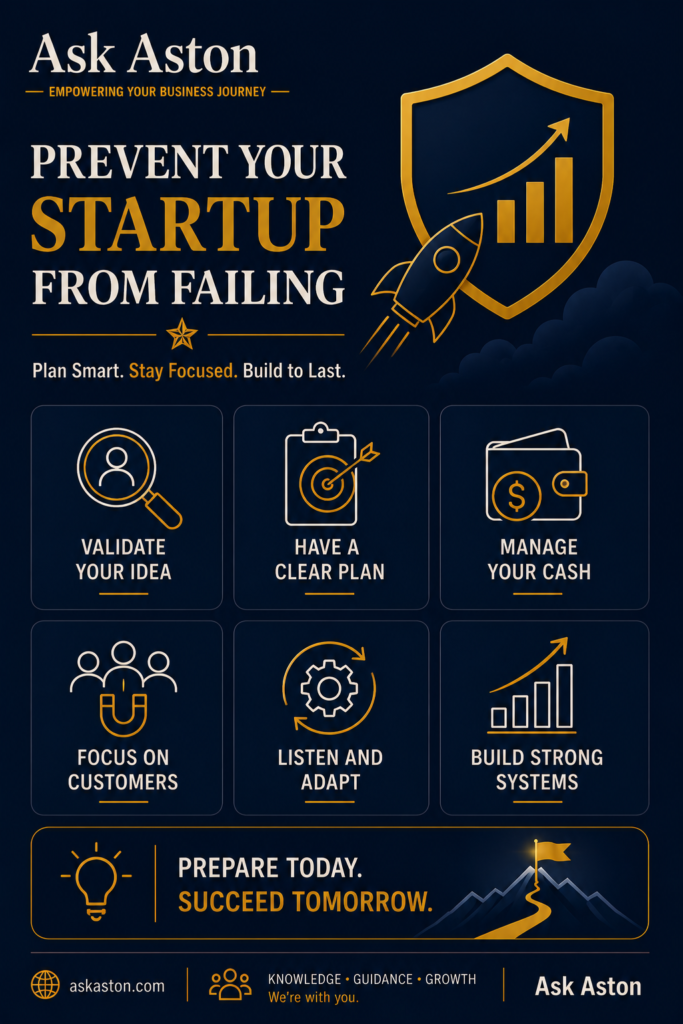
Manage Your Cash Carefully
Cash flow is one of the biggest reasons startups fail. Even profitable businesses can struggle if they run out of cash to pay expenses.
Track your income and expenses closely from the beginning. Create a realistic budget and avoid unnecessary spending during your early months.
Furthermore, build an emergency reserve whenever possible. Having extra cash available gives you flexibility when unexpected costs arise or sales fluctuate.
Smart financial management helps your business remain stable while it grows.
Focus on Finding Customers
A great product means very little if no one knows it exists. Therefore, customer acquisition should be one of your highest priorities.
Develop a marketing strategy that includes your website, search engines, social media, email marketing, networking, and referrals. At the same time, identify where your ideal customers spend their time and focus your efforts there. To read more about market research and finding customers, click the linked article.
As you gain customers, ask for reviews and referrals. Positive recommendations often become one of the most effective and affordable marketing tools available.
Listen and Adapt
Successful entrepreneurs remain flexible. Markets change, customer preferences evolve, and competitors introduce new ideas. Businesses that refuse to adapt often fall behind.
Pay attention to customer feedback and look for patterns. If multiple customers identify the same issue, consider making improvements.
Likewise, monitor your business performance regularly. Review your sales, marketing results, and customer satisfaction so you can make informed decisions based on real data rather than assumptions.
Build Strong Systems Early
Many startups rely entirely on the owner’s daily effort. While that approach works initially, it becomes difficult to scale over time.
Instead, create simple systems for customer service, accounting, marketing, sales, and daily operations. Organized processes reduce mistakes and improve efficiency as your business grows.
Technology can also help automate routine tasks, giving you more time to focus on serving customers and expanding your company.
Stay Patient and Keep Learning
Business success rarely happens overnight. Many entrepreneurs expect rapid growth and become discouraged when progress feels slow.
Instead, focus on consistent improvement. Learn from mistakes, celebrate small victories, and continue developing your skills. Read books, attend workshops, and seek advice from experienced business owners.
Persistence often separates successful entrepreneurs from those who give up too soon.
Build Your Startup for Long-Term Success
Preventing startup failure begins with thoughtful planning and disciplined execution. By validating your idea, managing your finances, attracting customers, building strong systems, and remaining adaptable, you create a stronger foundation for growth.
Every successful business faces challenges. The difference is how entrepreneurs respond to them. With preparation, persistence, and a willingness to learn, you can reduce risk and build a business that stands the test of time.
At AskAston, we help first-time entrepreneurs turn business ideas into launch-ready companies. By following proven strategies and avoiding common mistakes, you can launch with greater confidence and increase your chances of long-term success.
Try Ask Aston to brainstorm ideas, validate opportunities, create business plans, and get step-by-step guidance tailored to your goals.