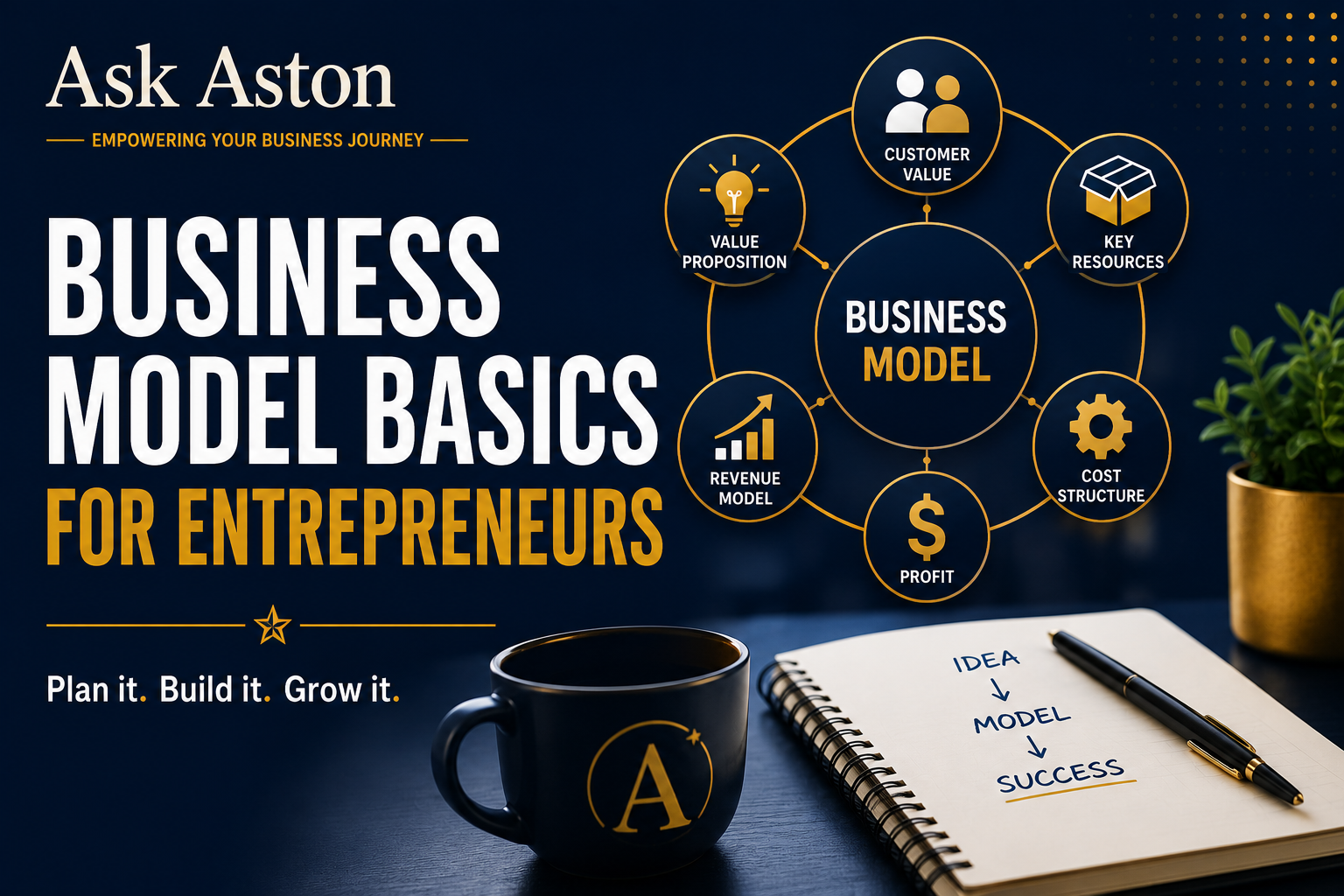
A great business idea is only the beginning of building a successful company. To turn that idea into a sustainable business, you need a clear plan for how your company will create value and make money. That plan is called your business model.
Many first-time entrepreneurs confuse a business model with a business plan. However, they serve different purposes. A business model explains how your business operates and generates revenue, while a business plan provides a detailed roadmap for launching and growing the company.
Understanding the basics of a business model will help you make better decisions and build a stronger foundation for long-term success.
What Is a Business Model?
A business model describes how your business creates value for customers while earning a profit. It explains who your customers are, what problem you solve, how you deliver your product or service, and how your company generates income.
Every successful business follows a business model, whether simple or complex. For example, a local bakery earns money by selling baked goods directly to customers. Meanwhile, a software company may charge a monthly subscription for access to its platform. Although these businesses operate differently, both rely on a clear business model.
Therefore, before investing significant time or money, you should understand exactly how your business will work.
Start with the Customer
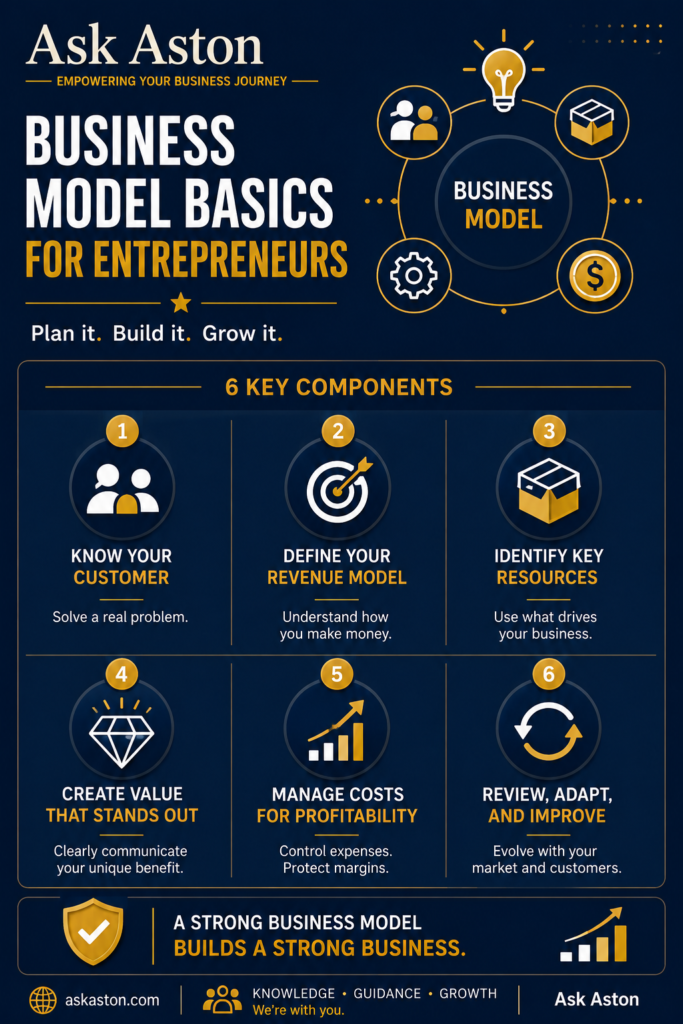
The strongest business models begin with the customer rather than the product. First, identify the people you want to serve. Then determine the problem they need solved.
When you understand your target audience, you can create products and services that match their needs. As a result, your marketing becomes more effective, and your customers are more likely to make a purchase.
Instead of asking, “What do I want to sell?” ask, “What problem am I helping customers solve?” That simple shift often leads to stronger business decisions. For more information on how to find your first customers, click the link.
Define How You Make Money
Every business needs a reliable way to generate revenue. While that may sound obvious, many entrepreneurs spend more time developing products than planning how they will earn income.
Think about how customers will pay for your offering. Will they purchase once, subscribe monthly, pay for premium features, or hire you for ongoing services?
At the same time, consider your costs. Materials, software, marketing, payroll, and operating expenses all affect your profitability. Even businesses with strong sales can struggle if expenses grow too quickly.
Consequently, understanding both revenue and costs helps you build a business that can succeed over time.
Identify Your Key Resources
Every business depends on certain resources to operate effectively. These may include equipment, technology, employees, suppliers, intellectual property, or specialized knowledge.
For example, an online consulting business may rely on expertise and scheduling software. On the other hand, a retail store depends on inventory, suppliers, and physical space.
Knowing which resources matter most allows you to focus your investments where they create the greatest value.
Build a Simple Value Proposition
Your value proposition explains why customers should choose your business instead of a competitor. It highlights the unique benefit you provide and the problem you solve.
A strong value proposition should be simple, clear, and customer-focused. Instead of listing features, explain the results customers can expect.
For example, rather than saying you offer bookkeeping services, explain that you help small business owners save time, stay organized, and prepare for tax season with confidence.
As your business grows, your value proposition should remain at the center of your marketing and customer experience.
Review and Improve Your Business Model
A business model is not something you create once and never revisit. Markets change, customer preferences evolve, and new competitors enter the industry. Because of that, successful entrepreneurs review their business models regularly.
Pay attention to customer feedback, sales trends, and financial performance. If something is not working, make adjustments before small problems become major obstacles.
Likewise, continue testing new ideas that could improve efficiency, increase revenue, or deliver more value to customers. Small improvements over time often produce significant results.
If you want to read more about different types of business models, check out the linked article.
Build Your Business on a Strong Foundation
A clear business model gives your company direction from the very beginning. It helps you understand your customers, generate revenue, manage costs, and create lasting value.
Need help with creating a business model for your new business?
Try Ask Aston to brainstorm ideas, validate opportunities, create business plans, and get step-by-step guidance tailored to your goals.