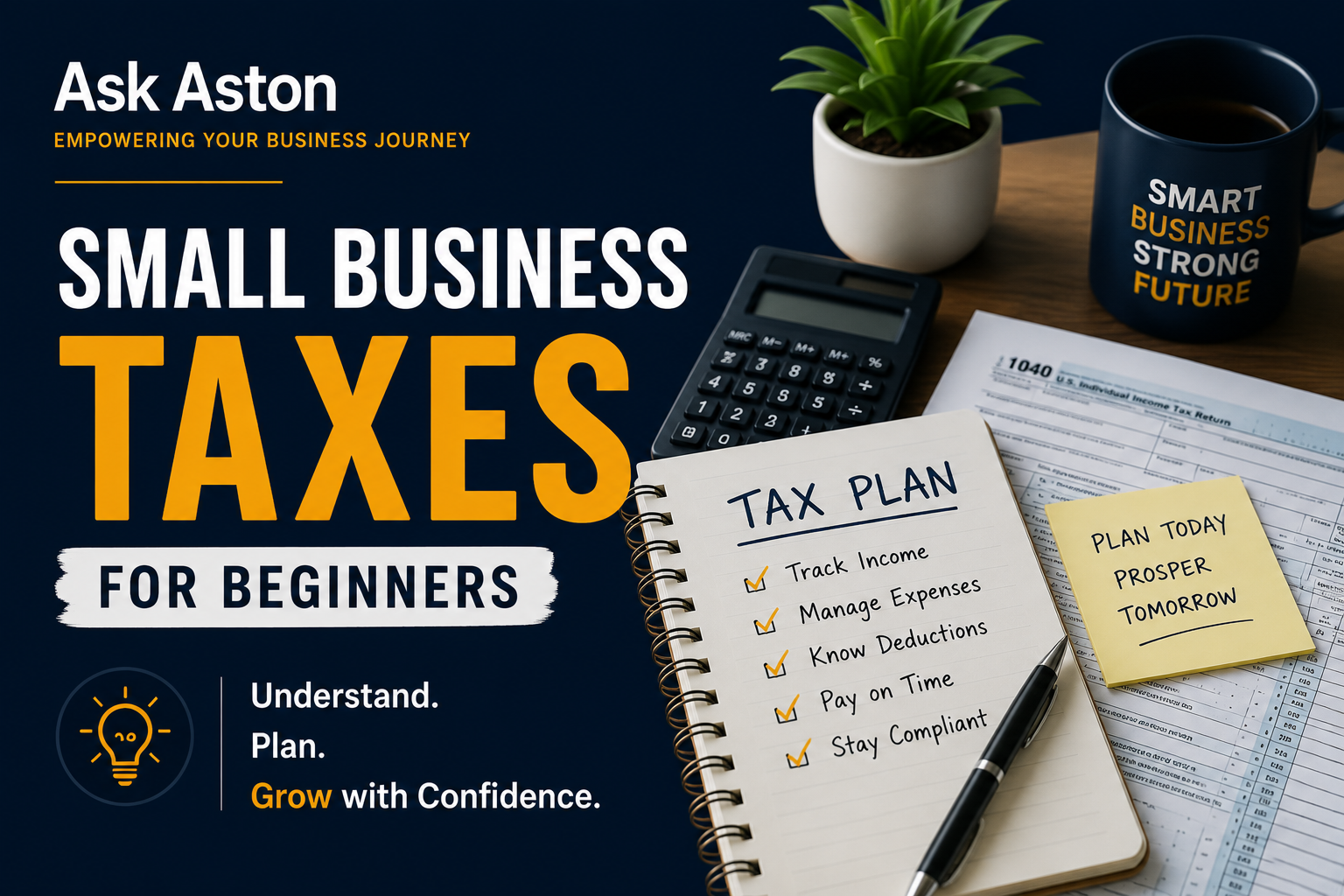
Taxes can feel overwhelming when you start a business. However, understanding a few basic concepts can make tax season much less stressful. While tax rules vary by location and business structure, every entrepreneur benefits from learning the fundamentals early.
By staying organized and planning ahead, you can avoid surprises and make better financial decisions throughout the year.
Why Business Taxes Matter
Every business owner has tax responsibilities. These taxes help fund public services and support government programs. More importantly, staying compliant helps you avoid penalties, interest charges, and unnecessary stress.
Many new entrepreneurs focus heavily on sales and growth. However, taxes deserve attention from the beginning. Building good habits early can save time and money later.
Fortunately, you do not need to become a tax expert overnight. Instead, focus on understanding the basics and keeping accurate records.
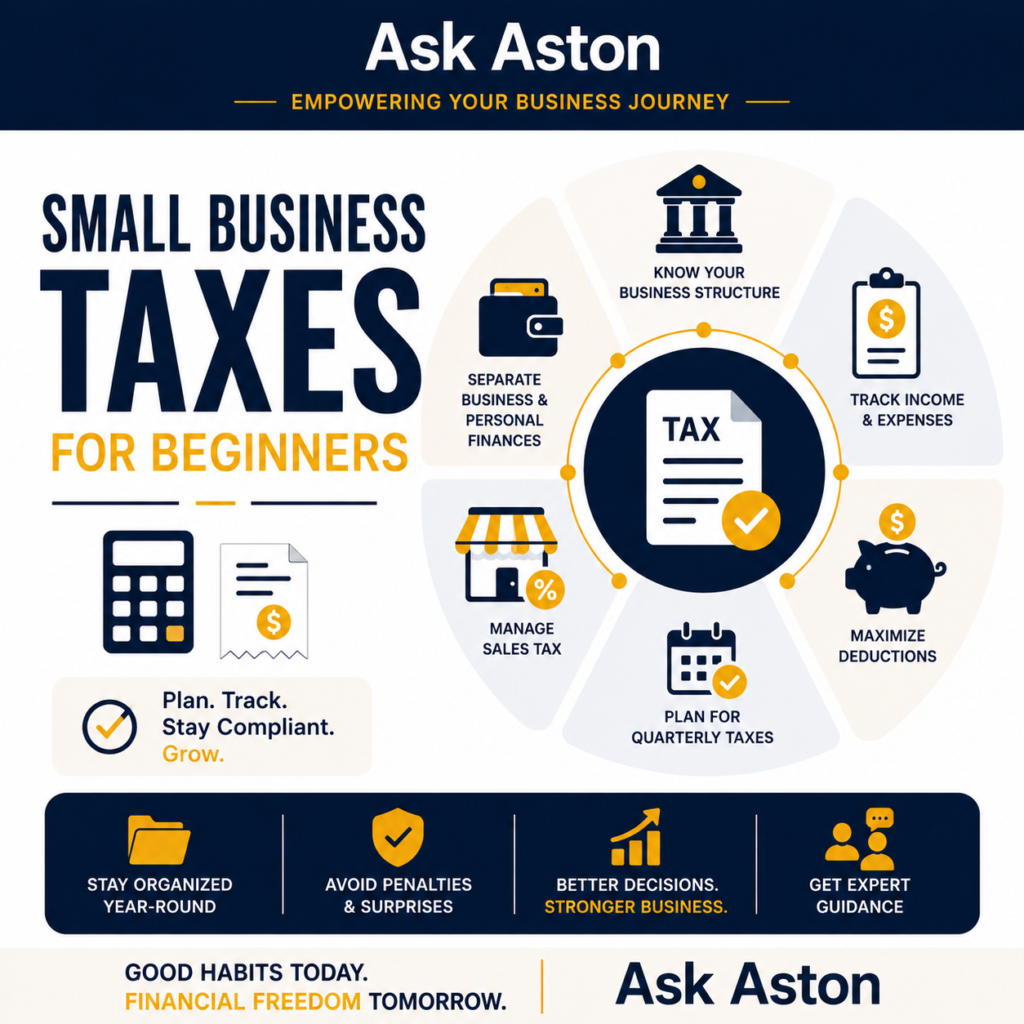
Understand Your Business Structure
Your business structure affects how you pay taxes.
For example, sole proprietors typically report business income and expenses on their personal tax returns. On the other hand, LLCs, partnerships, and corporations may have different filing requirements.
Because tax rules vary, it is important to understand how your business is classified. Knowing your structure helps you prepare for filing deadlines and tax obligations. Check out this article on choosing a business structure for more information.
If you are unsure about your classification, consider consulting a qualified tax professional.
Track Income and Expenses
Accurate recordkeeping forms the foundation of good tax management.
Keep records of all business income, including sales, service revenue, and other earnings. At the same time, track business expenses such as software subscriptions, marketing costs, office supplies, travel, and equipment purchases.
As a result, you will have the information needed to calculate profits and claim eligible deductions.
Many entrepreneurs use accounting software or bookkeeping tools to simplify this process. Even a basic system is better than waiting until tax season to organize receipts.
Separate Business and Personal Finances
One of the easiest ways to simplify taxes is by keeping business and personal finances separate.
A dedicated business bank account helps you track transactions more accurately. In addition, separate accounts make bookkeeping easier and reduce confusion during tax preparation.
Mixing personal and business expenses can create unnecessary complications. Therefore, establish clear financial boundaries as soon as possible.
This simple step can save significant time when filing taxes. If you need more information on business bank accounts, click the article link.
Learn About Tax Deductions
Business deductions can lower your taxable income.
A deduction reduces the amount of income subject to taxes. Common deductions may include office supplies, software, professional services, marketing expenses, business insurance, and certain travel costs.
However, not every expense qualifies as a deduction. Therefore, keep detailed records and save receipts throughout the year.
Understanding deductions can help you keep more of your earnings while remaining compliant with tax laws. Consider spending some time on the IRS website – the small business and self-employed tax center.
Plan for Quarterly Taxes
Many small business owners must pay estimated taxes throughout the year.
Unlike traditional employees, entrepreneurs often do not have taxes automatically withheld from their income. As a result, they may need to make quarterly payments.
Setting aside a percentage of your revenue each month can help you prepare for these obligations. Furthermore, regular tax payments may prevent large bills and penalties later.
Review local requirements to determine whether estimated payments apply to your business.
Know About Sales Tax
If you sell taxable products or services, you may need to collect sales tax from customers.
The rules vary by state and location. Therefore, research the requirements where your business operates.
In many cases, businesses collect sales tax during transactions and then submit those funds to the appropriate government agency.
Because sales tax does not belong to the business, it is important to track and manage these funds carefully.
Consider Working With a Professional
Although many entrepreneurs handle basic bookkeeping themselves, professional guidance can provide valuable support.
Accountants and tax professionals can help identify deductions, explain filing requirements, and reduce costly mistakes. Additionally, they can offer advice as your business grows and becomes more complex.
Even a single consultation may provide clarity and confidence during your first year in business.
Stay Organized Year-Round
Tax preparation becomes much easier when you stay organized throughout the year.
Instead of scrambling to gather documents before deadlines, create a routine for tracking income, expenses, receipts, and important financial records. Consistent organization reduces stress and improves accuracy.
Most importantly, it allows you to focus more energy on serving customers and growing your business.
Build Strong Financial Habits Early
Small business taxes may seem complicated at first. However, the basics are straightforward. Track your income, monitor expenses, understand your obligations, and maintain organized records.
Over time, these habits become part of your regular business routine. As a result, tax season feels less intimidating and more manageable.
Need help building a strong financial foundation for your startup?
Try Ask Aston to brainstorm ideas, validate opportunities, create business plans, and get step-by-step guidance tailored to your goals.