
Cash flow is one of the most important factors in business success. Even profitable companies can struggle if they do not have enough cash available to pay bills, purchase inventory, or cover payroll. For new business owners, understanding cash flow can make the difference between steady growth and financial stress.
Fortunately, managing cash flow does not have to be complicated. With a few smart habits and consistent monitoring, you can keep your business financially healthy and prepared for growth.
Understand What Cash Flow Means
Cash flow refers to the movement of money into and out of your business.
Money coming in includes sales revenue, customer payments, and other income. Money going out includes rent, software subscriptions, inventory, marketing expenses, payroll, and other operating costs.
Positive cash flow occurs when more money enters your business than leaves it. Negative cash flow occurs when expenses exceed income.
Therefore, your goal is to maintain a positive cash flow whenever possible.
Create a Cash Flow Forecast
A cash flow forecast helps you predict future income and expenses.
Start by estimating how much money you expect to receive each month. Then list your anticipated expenses, including both fixed and variable costs. Fixed expenses may include rent and software subscriptions, while variable costs can include advertising and inventory purchases.
As a result, you can identify potential cash shortages before they become serious problems.
Review your forecast regularly and adjust it as new information becomes available.
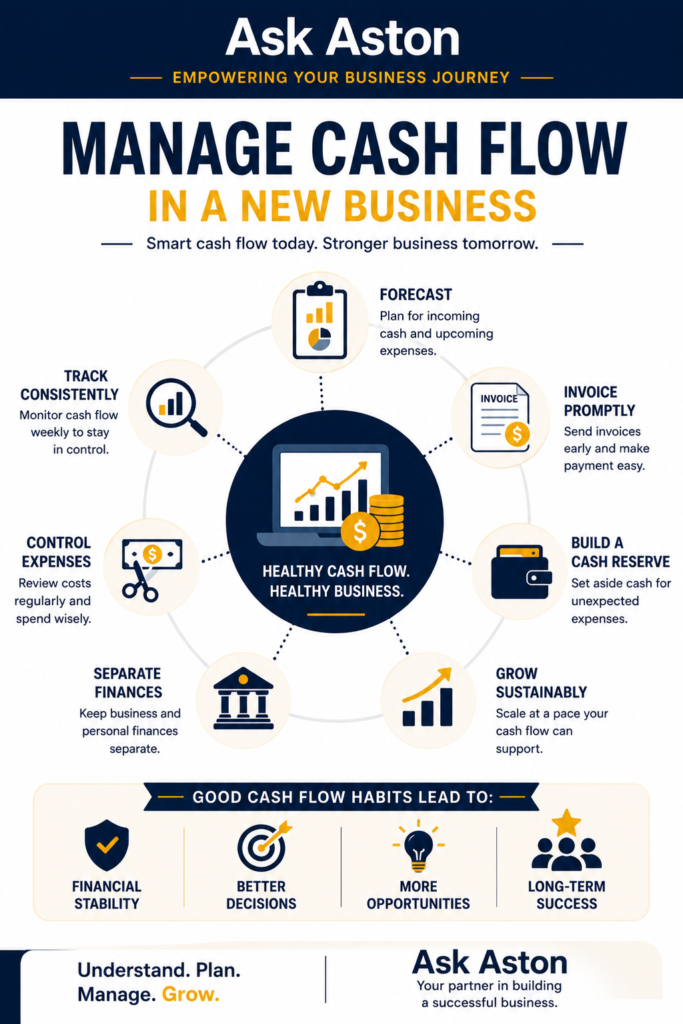
Track Your Numbers Consistently
Many new entrepreneurs focus heavily on sales but overlook financial tracking. However, successful business owners monitor their cash flow on a regular basis.
Set aside time each week to review income, expenses, and account balances. This habit helps you spot trends and address issues early.
In addition, regular tracking allows you to make better decisions about spending, hiring, and growth opportunities.
The more familiar you become with your numbers, the more confident your decisions will be.
Invoice Customers Quickly
Delayed payments can create cash flow challenges even when sales are strong.
Send invoices as soon as you complete work or deliver products. Additionally, make payment terms clear and easy for customers to understand.
You may also consider offering online payment options to simplify the process.
The faster customers pay, the healthier your cash flow becomes.
Build a Cash Reserve
Unexpected expenses occur in almost every business.
Equipment may break, sales may slow temporarily, or emergency costs may arise without warning. Therefore, building a cash reserve can provide valuable protection.
Aim to set aside a portion of your profits each month. Over time, these savings can create a financial cushion that helps your business navigate challenges more comfortably.
Even a modest reserve can reduce stress and improve flexibility.
Control Expenses Carefully
Managing expenses is just as important as increasing revenue.
Before making purchases, ask whether the expense directly supports your business goals. If a cost does not contribute to growth, efficiency, or customer satisfaction, consider delaying it.
Furthermore, review recurring expenses regularly. You may discover subscriptions or services that no longer provide enough value.
Small savings can add up quickly and improve overall cash flow.
Avoid Growing Too Fast
Growth is exciting, but rapid expansion can strain cash flow.
For example, hiring employees, increasing inventory, or launching major marketing campaigns often requires significant upfront spending. If revenue does not increase as expected, cash reserves can disappear quickly.
Instead, grow at a pace your business can support. Sustainable growth often creates stronger long-term results than aggressive expansion.
Careful planning helps ensure growth strengthens your business rather than creating financial pressure.
Separate Business and Personal Finances
Maintaining separate financial accounts improves organization and visibility.
A dedicated business bank account allows you to track income and expenses more accurately. Additionally, it simplifies bookkeeping and tax preparation. For more information on business bank accounts, click the link.
When personal and business finances remain separate, you gain a clearer understanding of your company’s financial health.
This clarity supports better cash flow management throughout the year.
Focus on Long-Term Financial Health
Cash flow management is not about reacting to problems. Instead, it involves creating habits that support long-term success.
By forecasting income, monitoring expenses, invoicing promptly, and building financial reserves, you can create a stronger foundation for growth. While every business faces challenges, strong cash flow management helps you navigate them with confidence.
The businesses that survive and thrive often share one common trait: they know where their money is going and plan ahead. By developing that skill early, you can position your business for lasting success.
How to create a financial forecast is another article you might want consider. Finally, check out the Small Business Administration article on managing your finances.
Need help building a financial plan for your startup?
Try Ask Aston to brainstorm ideas, validate opportunities, create business plans, and get step-by-step guidance tailored to your goals.