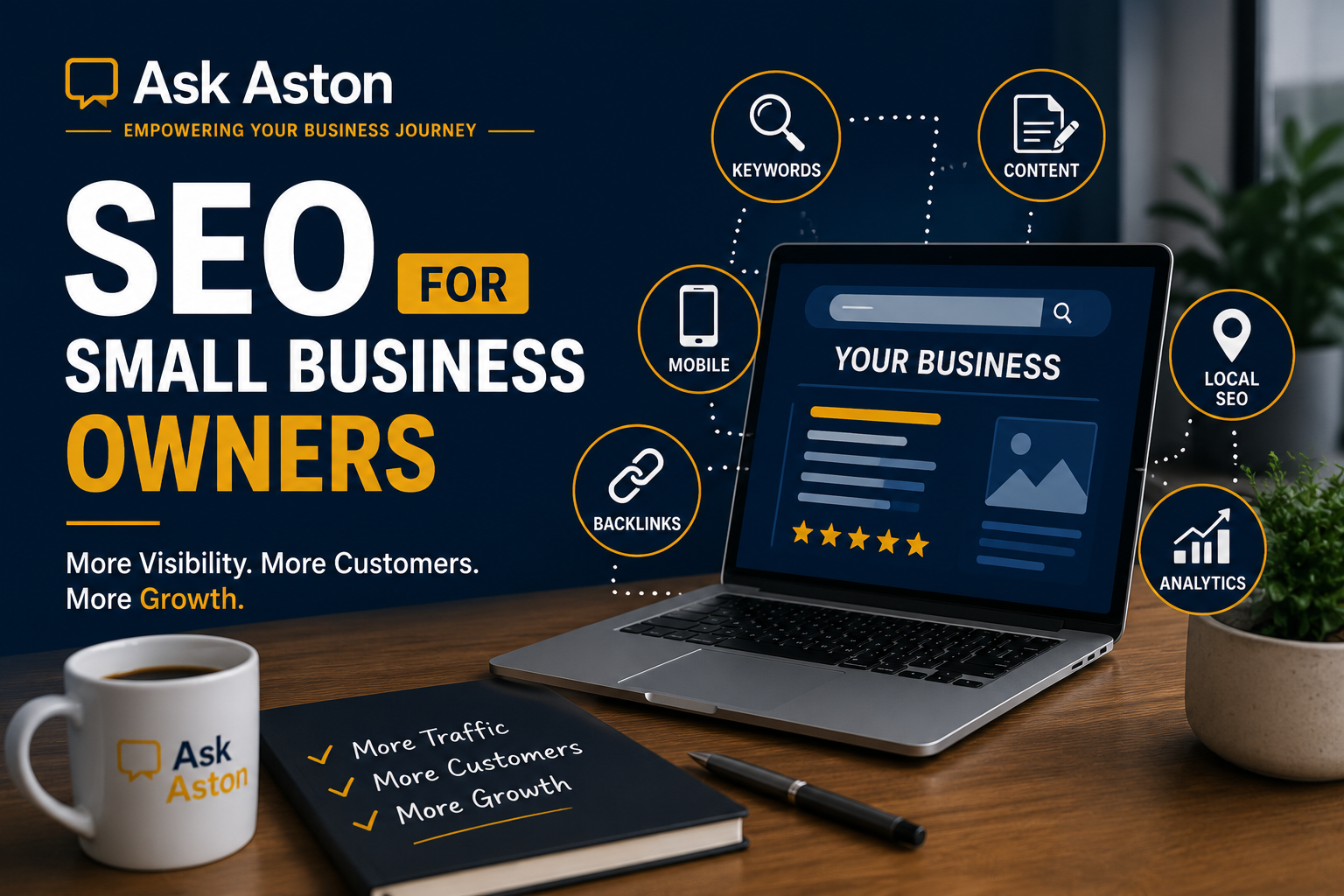
Search Engine Optimization, or SEO, helps your business appear in search engine results when people look for products, services, or information online. For small business owners, SEO can be one of the most cost-effective marketing strategies available.
Unlike paid advertising, SEO can continue generating traffic long after you publish content. Although results take time, a strong SEO strategy can help attract potential customers and build long-term visibility.
Fortunately, you do not need to be a technical expert to get started.
What Is SEO?
SEO is the process of improving your website so search engines can better understand and rank your content.
When someone searches for a topic related to your business, search engines evaluate thousands of pages to determine which results provide the most value. Therefore, businesses that create helpful content and maintain a quality website often rank higher.
The goal of SEO is simple: help the right people find your business online.
Start With Keyword Research
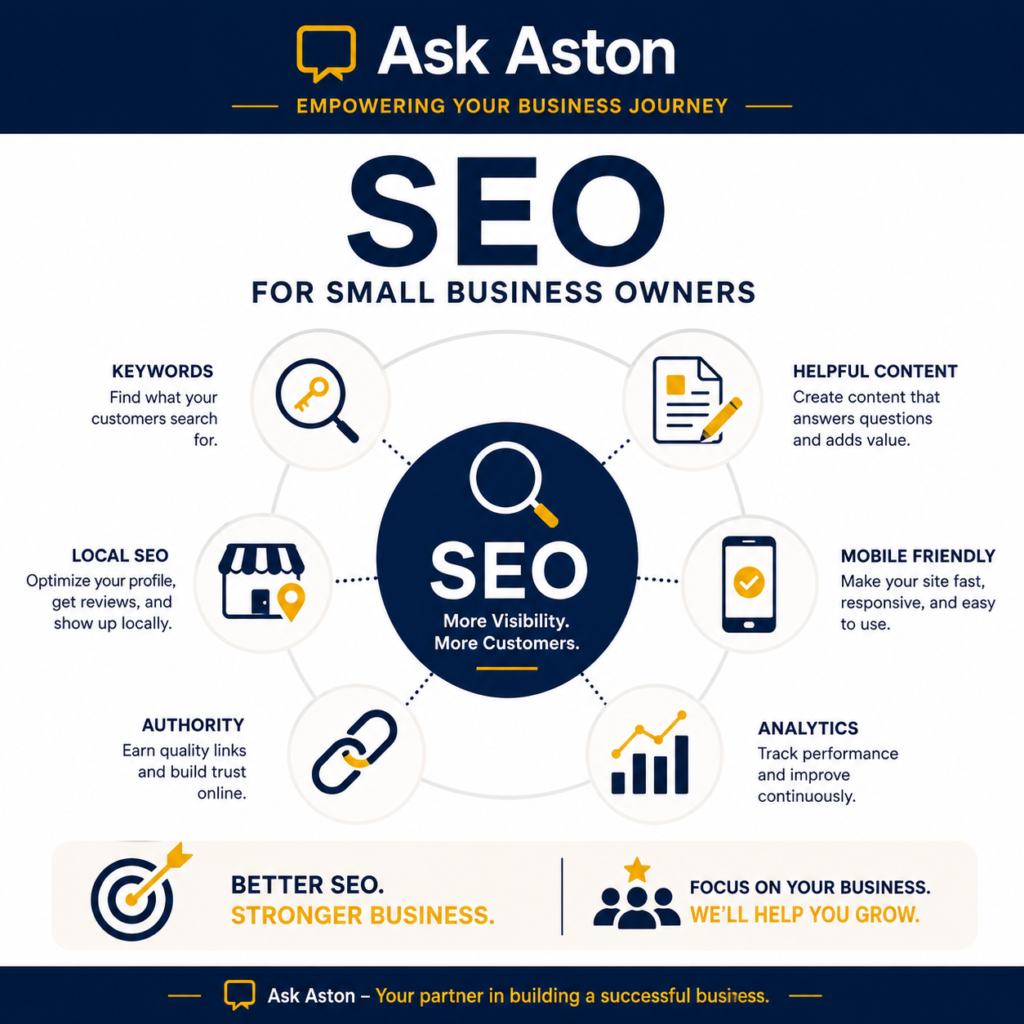
Every successful SEO strategy begins with keyword research.
Keywords are the words and phrases people type into search engines. For example, someone searching for a local bakery might enter “best bakery near me” or “custom birthday cakes.”
To find useful keywords, think about the questions your customers ask most often. Then use keyword research tools to discover related search terms.
Focus on keywords that match your products, services, and target audience. As a result, you can attract visitors who are more likely to become customers.
Create Helpful Content
Content remains one of the most important parts of SEO.
Search engines want to deliver useful information to users. Therefore, businesses that publish valuable content often gain more visibility over time.
Consider creating articles, guides, FAQs, and resources that answer common customer questions. For example, a landscaping company might publish articles about lawn care, irrigation systems, or seasonal maintenance tips.
The more helpful your content becomes, the more opportunities you create for people to discover your business.
Optimize Your Website Pages
Creating content is important, but optimization also matters.
Each page on your website should include a clear title, descriptive headings, and relevant keywords. In addition, write compelling page descriptions that encourage people to click when your website appears in search results.
Keep your content organized and easy to read. Use short paragraphs, clear headings, and logical page structures.
These improvements help both visitors and search engines understand your content.
Improve Your Local SEO
For many small businesses, local SEO can deliver significant results.
When people search for businesses nearby, search engines often display local listings before traditional website results. Therefore, optimizing your local presence is essential.
Start by claiming and updating your business profile on Google. Include accurate contact information, business hours, services, and photos.
Additionally, encourage satisfied customers to leave reviews. Positive reviews can improve visibility and help build trust with potential customers.
Make Your Website Mobile-Friendly
Many people now search from smartphones and tablets.
If your website loads slowly or displays poorly on mobile devices, visitors may leave quickly. Consequently, search engines may view the user experience as less favorable.
Choose a responsive website design that works well across different screen sizes. Also, optimize images and reduce unnecessary elements that may slow loading times.
A fast, mobile-friendly website benefits both SEO and customer experience.
Build Authority Through Links
Search engines often view links from other websites as signals of trust and authority.
You can earn links by creating valuable content that others want to reference. Additionally, partnerships, guest articles, local business directories, and community involvement may help generate quality links.
Focus on building genuine relationships rather than chasing large numbers of links. High-quality links generally provide more value than low-quality ones.
Track Your Results
SEO is not a one-time project. Instead, it requires ongoing attention and improvement.
Use tools such as Google Analytics and Google Search Console to monitor website traffic and search performance. These tools can help you understand which pages attract visitors and which keywords drive traffic.
By reviewing your data regularly, you can identify opportunities for improvement and make better marketing decisions.
Focus on Long-Term Growth
SEO takes time, but the rewards can be substantial.
Rather than trying to achieve overnight results, focus on creating helpful content, improving your website, and serving your audience consistently. Over time, these efforts can increase visibility, attract qualified visitors, and support business growth.
For small business owners, SEO is not simply about rankings. More importantly, it is about helping potential customers find solutions and connecting them with your business when they need it most.
Check out this webpage if you want more information on Search Engine Optimization.
Need help building an SEO strategy for your startup?
Try Ask Aston to brainstorm ideas, validate opportunities, create business plans, and get step-by-step guidance tailored to your goals.