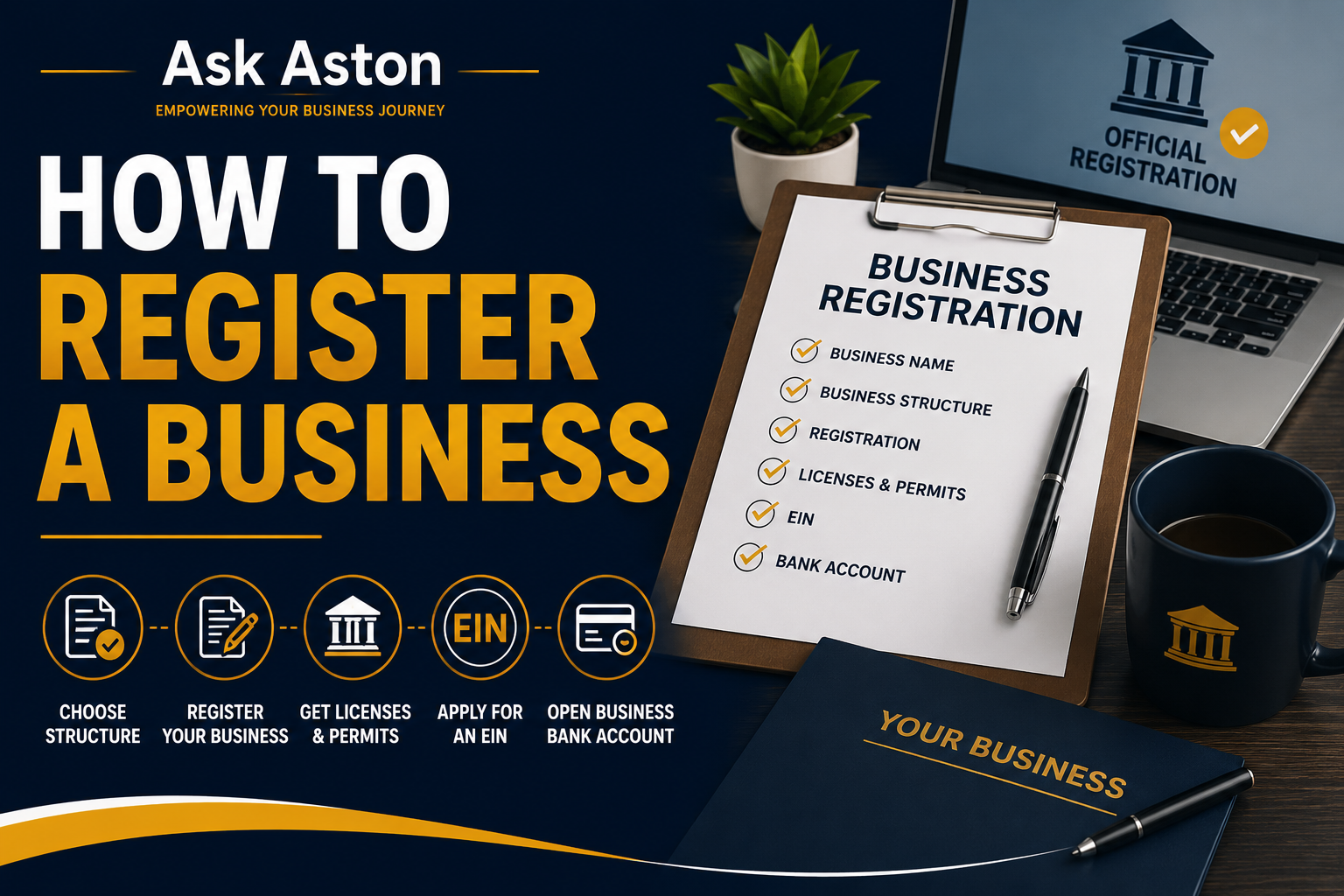
Starting a business is an exciting step, but before you begin serving customers, it is important to properly register your business. Business registration helps establish your company as a legal entity, protects your brand name, and ensures you comply with government requirements.
While the registration process varies depending on your location and business structure, the basic steps are often similar. Understanding how to register a business can help you avoid common mistakes and start your entrepreneurial journey with confidence.
Choose a Business Name
The first step in registering a business is selecting a name. Your business name should be memorable, easy to understand, and relevant to your products or services.
Before becoming attached to a name, check whether it is already being used by another business. Search your state’s business database, review trademark records, and check domain name availability if you plan to create a website.
Choosing a unique business name can help prevent legal issues and make it easier to build a recognizable brand. Click here if you are looking for more information on choosing a business name.
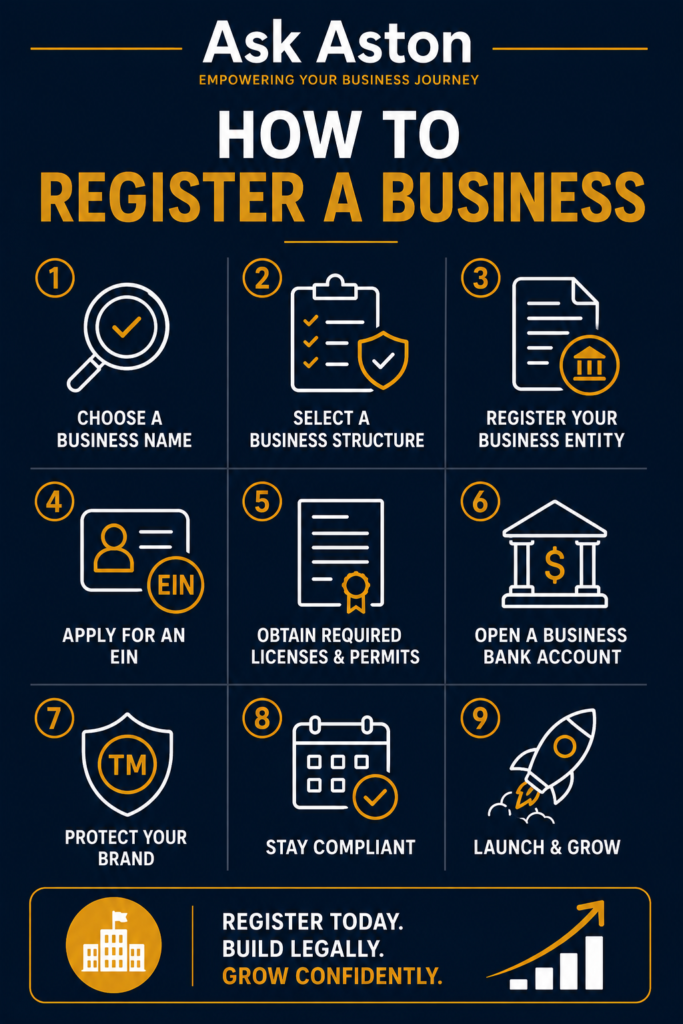
Select a Business Structure
Your business structure determines how your company is taxed, managed, and legally organized.
Common business structures include:
- Sole Proprietorship
- Limited Liability Company (LLC)
- Partnership
- Corporation
- S Corporation
Many first-time entrepreneurs choose an LLC because it provides liability protection while remaining relatively simple to manage. However, the best structure depends on your goals, finances, and long-term plans.
Consider consulting a legal or tax professional if you are unsure which structure is right for your situation. Learn more about business structures in this article.
Register Your Business Entity
Once you select a business structure, you may need to register with your state or local government.
For LLCs and corporations, this typically involves filing formation documents and paying a registration fee. The required paperwork varies by state, but most governments provide online filing options that simplify the process.
After approval, your business becomes a legally recognized entity that can operate under its registered name.
Apply for an EIN
An Employer Identification Number (EIN) is a federal tax identification number issued by the Internal Revenue Service (IRS).
Even if you do not plan to hire employees immediately, obtaining an EIN can be beneficial. Many banks require it to open a business account, and it helps separate your personal and business finances.
Applying for an EIN is typically free and can often be completed online in just a few minutes.
Obtain Required Licenses and Permits
Depending on your industry and location, your business may need specific licenses or permits before operating legally.
Examples include:
- Local business licenses
- Professional licenses
- Sales tax permits
- Health permits
- Home occupation permits
- Industry-specific certifications
Requirements vary widely, so research local, state, and federal regulations that apply to your business.
Failing to obtain required permits could result in fines or operational delays. Read this article for more detailed information on required business licenses and permits.
Open a Business Bank Account
One of the most important steps after registration is opening a dedicated business bank account.
Separating personal and business finances makes bookkeeping easier, improves professionalism, and simplifies tax preparation. It also helps maintain liability protection if you operate as an LLC or corporation.
Most banks require your business registration documents and EIN to open an account.
Protect Your Business Name and Brand
As your business grows, protecting your brand becomes increasingly important.
Consider registering a trademark if your business name, logo, or slogan plays a significant role in your branding strategy. A trademark can help prevent competitors from using similar branding that may confuse customers. Check out this website for more information on registering your trademark.
You may also want to secure matching website domains and social media usernames to maintain a consistent online presence.
Stay Compliant After Registration
Registering your business is only the beginning. Most businesses have ongoing compliance requirements.
Depending on your structure and location, you may need to:
- File annual reports
- Renew licenses and permits
- Pay state fees
- Maintain accurate financial records
- Submit tax filings
Staying organized and meeting deadlines can help you avoid penalties and keep your business in good standing.
Registration Creates a Strong Foundation
Registering a business may seem overwhelming at first, but taking the proper steps can provide valuable legal protection and create a solid foundation for growth.
By choosing the right business structure, registering your entity, obtaining necessary licenses, and keeping your finances organized, you can position your business for long-term success.
Every successful company starts with a few important administrative steps. Completing them early allows you to focus on what matters most—serving customers and growing your business.
Need help navigating the startup process?
Try Ask Aston to brainstorm ideas, validate opportunities, create business plans, and get step-by-step guidance tailored to your goals.