
Many people dream of starting a business, but only a small percentage build companies that achieve long-term success. While every entrepreneur’s journey is unique, successful business owners often share common habits, mindsets, and approaches that help them stand out.
Success is rarely the result of luck alone. More often, it comes from consistent actions, smart decision-making, and a willingness to learn from experience. Understanding what successful entrepreneurs do differently can help aspiring business owners develop the skills and habits needed to build a thriving business.
They Focus on Solving Problems
Successful entrepreneurs do not start with products—they start with problems.
The most successful businesses exist because they provide solutions to real customer challenges. Entrepreneurs who focus on solving meaningful problems are more likely to create products and services that people actually want.
Rather than asking, “What can I sell?” successful founders often ask, “What problem can I solve?” This customer-focused mindset helps them build businesses that create genuine value.
They Take Action Instead of Waiting
Many people spend years thinking about starting a business but never take the first step. Successful entrepreneurs understand that there is rarely a perfect time to launch.
Instead of waiting for complete certainty, they take calculated action. They test ideas, gather feedback, and learn through experience.
Progress often comes from doing rather than endlessly planning. Successful entrepreneurs know that small actions taken consistently can lead to significant results over time.
They Embrace Continuous Learning
Business owners must constantly adapt to changing markets, customer needs, and technology.
Successful entrepreneurs are lifelong learners. They read books, listen to podcasts, take courses, seek mentorship, and stay informed about industry trends. They understand that learning does not stop once a business launches.
Their willingness to acquire new knowledge allows them to make better decisions and identify opportunities that others may overlook.
Need help developing your business idea and entrepreneurial skills?
Try Ask Aston to brainstorm ideas, validate opportunities, create business plans, and get step-by-step guidance tailored to your goals.
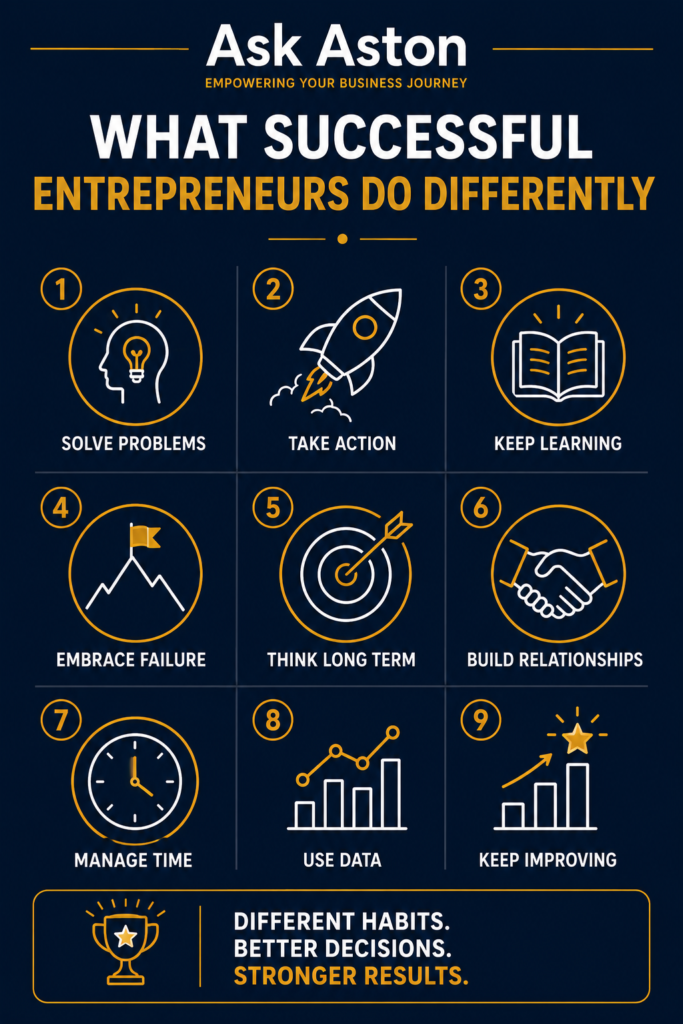
They Are Comfortable With Failure
One of the biggest differences between successful entrepreneurs and those who give up is how they view failure.
Successful business owners do not see setbacks as proof that they should quit. Instead, they treat mistakes as learning opportunities. Every failed marketing campaign, rejected proposal, or unsuccessful product launch provides valuable information.
By viewing failure as feedback, entrepreneurs can make adjustments and improve rather than becoming discouraged by temporary setbacks.
They Stay Focused on Long-Term Goals
Entrepreneurship often involves delayed rewards. Businesses rarely become successful overnight.
Successful entrepreneurs understand that meaningful growth takes time. They remain committed to long-term goals even when immediate results are not visible.
Rather than chasing every new opportunity or trend, they stay focused on the activities that move their business forward. This consistency often creates a competitive advantage over time.
They Build Strong Relationships
Business success is rarely achieved alone. Entrepreneurs rely on customers, mentors, partners, employees, and professional networks throughout their journey.
Successful entrepreneurs invest time in building genuine relationships. They listen carefully, communicate effectively, and create trust with the people around them.
Strong relationships often lead to referrals, partnerships, opportunities, and valuable advice that can accelerate business growth.
They Manage Their Time Effectively
Time is one of the most valuable resources an entrepreneur has. Successful business owners understand that being busy is not the same as being productive.
They prioritize important tasks, eliminate distractions, and focus on activities that generate results. Many use planning systems, calendars, and productivity tools to stay organized.
By managing their time intentionally, they can accomplish more while avoiding unnecessary stress and burnout. If you struggle with this, check out this article specifically on time management for entrepreneurs.
They Make Decisions Based on Data
While intuition can be helpful, successful entrepreneurs do not rely solely on feelings. They gather information, analyze results, and use data to guide important decisions.
Customer feedback, sales reports, website analytics, and market research provide valuable insights that help business owners make smarter choices. Check out this article if you want to read more about market research.
Data-driven decision-making reduces guesswork and improves the likelihood of achieving positive outcomes.
They Never Stop Improving
Perhaps the most important trait successful entrepreneurs share is a commitment to continuous improvement.
They are always looking for ways to improve their products, services, systems, marketing, and customer experience. They understand that success is not a destination but an ongoing process.
This mindset helps them remain competitive and adapt as their business grows.
Success Comes From Consistent Habits
Successful entrepreneurs are not necessarily smarter, luckier, or more talented than everyone else. What often sets them apart is their willingness to solve problems, take action, learn continuously, and stay committed to their goals.
By developing these habits and mindsets, aspiring entrepreneurs can increase their chances of building a successful and sustainable business. Success rarely happens overnight, but consistent effort and smart decisions can create remarkable results over time. You might want to check out our article on common mistakes that entrepreneurs make.