
Pricing is one of the most important decisions new business owners make. Set your prices too high, and customers may hesitate to buy. Set them too low, and you may struggle to make a profit or undervalue your work.
Understanding the Cost of Your Product or Service
The first step is understanding your costs. Calculate how much it takes to deliver your product or service, including materials, software, marketing, labor, and overhead expenses. Without understanding your costs, it is difficult to build a sustainable business.
Many entrepreneurs focus only on direct expenses and forget to account for ongoing business costs. Including all expenses in your calculations helps ensure your pricing covers your costs and leaves room for profit. A clear understanding of your numbers makes it easier to set prices confidently and avoid financial surprises as your business grows.
Research Competitor Pricing
Next, research competitors in your market. Look at how similar businesses price their products or services and pay attention to how they position themselves. Pricing often reflects branding, quality, convenience, and customer experience — not just the product itself. Check out this website for more information on researching competitor pricing.
Price Based on Customer Value
It is also important to think about the value you provide to customers. Businesses that solve expensive or frustrating problems can often charge more because the outcome is highly valuable to the customer.
Many new entrepreneurs make the mistake of pricing too low out of fear that nobody will buy. Extremely low prices can sometimes reduce trust and make your business appear less professional. Customers often associate pricing with quality.
Testing and adjusting your pricing over time is normal. You may discover certain customers are willing to pay more than expected, or that certain offers convert better than others. Pricing is rarely permanent.
Don’t Compete on Price Alone
You should also avoid competing only on price whenever possible. Businesses that rely entirely on being the cheapest often struggle to grow sustainably. Strong branding, customer experience, and quality can justify higher pricing.
Customers often choose businesses for reasons beyond cost. Reliability, expertise, convenience, customer support, and reputation can all influence buying decisions. Focusing on these areas can help you stand out from competitors and create loyal customers who are willing to pay for the value you provide.
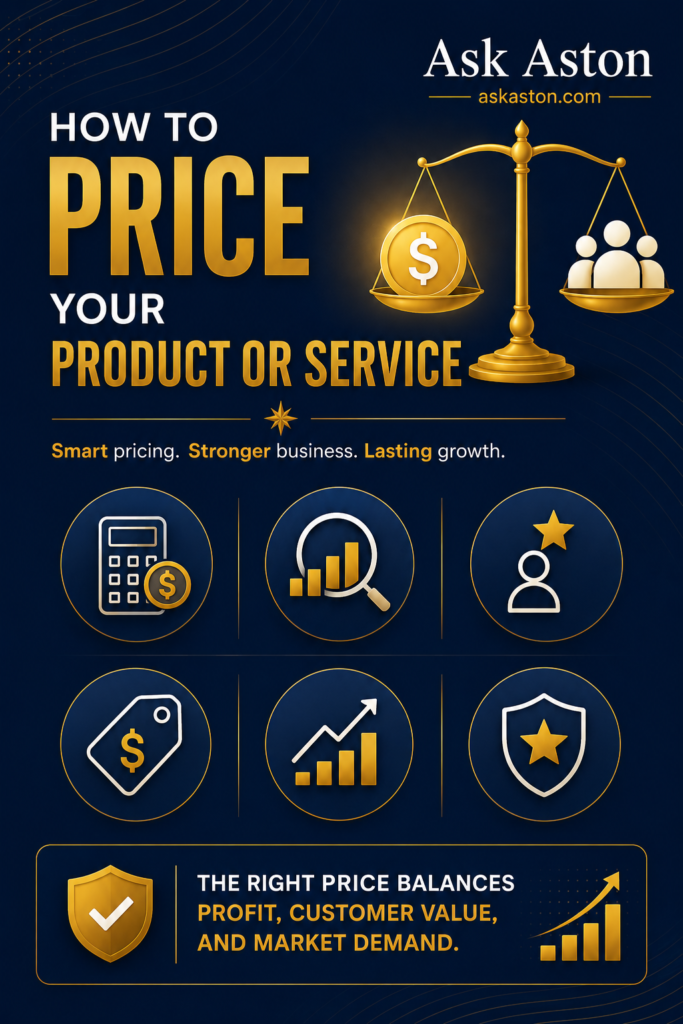
The right price balances profitability, customer value, and market demand. As your business evolves, your pricing strategy can evolve as well.
Need help pricing your product or building a profitable business model?
Try Ask Aston to brainstorm ideas, validate opportunities, create business plans, and get step-by-step guidance tailored to your goals.