
Starting a business does not require a large investment. In fact, many successful companies began with a modest budget and a willingness to solve a problem. Today, affordable technology, online marketing, and digital tools make it easier than ever to launch a business without spending thousands of dollars.
If you have a business idea and about $1,000 to invest, you can build a strong foundation while keeping your financial risk low. The key is choosing a business that matches your skills, interests, and local demand.
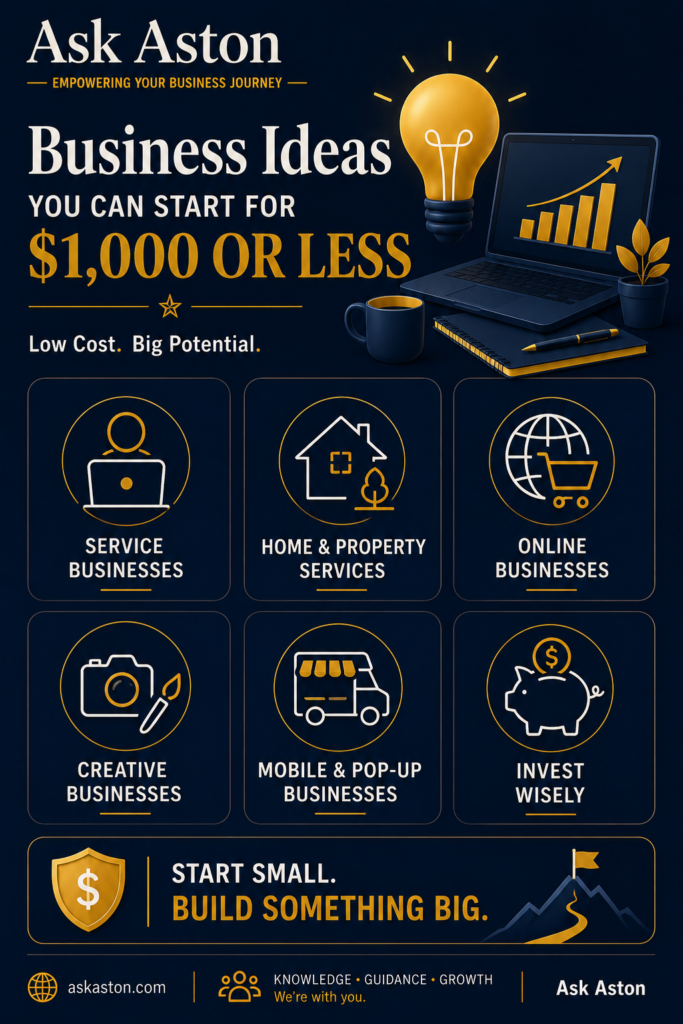
Here are several business ideas that can help you get started without breaking the bank.
Service-Based Businesses
Service businesses often require the lowest startup costs because you are selling your expertise instead of physical products. For example, you could start a bookkeeping service, graphic design business, social media management company, virtual assistant service, tutoring business, or business consulting practice.
Your initial expenses may include a website, business registration, software subscriptions, and marketing materials. In many cases, these costs remain well below $1,000.
Additionally, service businesses allow you to build a customer base before investing in expensive equipment or hiring employees.
Home and Property Services
Many home service businesses can launch with basic equipment and a reliable vehicle. Lawn care, pressure washing, window cleaning, pet sitting, house cleaning, and handyman services continue to see steady demand in many communities.
Although you may need to purchase a few tools or supplies, you can often start small and reinvest your profits as your business grows.
Furthermore, satisfied customers frequently recommend these businesses to friends and neighbors, making word-of-mouth marketing especially valuable.
Online Businesses
The internet offers countless opportunities for entrepreneurs with limited startup funds. You could create an online store, start a blog, sell digital products, offer online coaching, or launch a freelance writing business.
Many online businesses require only a domain name, website hosting, and a few software tools. As a result, you can spend more of your budget attracting customers instead of buying inventory.
Because online businesses can reach customers anywhere, they also provide significant opportunities for long-term growth. Want to read more about online business ideas? Check out the linked article.
Creative Businesses
If you enjoy making or designing products, a creative business may be a great option. Handmade crafts, custom artwork, photography, woodworking, and personalized gifts can all begin with a relatively small investment.
Start by offering a limited selection of products rather than purchasing large amounts of inventory. This approach allows you to test customer demand while reducing financial risk.
As your sales increase, you can expand your product line based on what customers buy most often.
Mobile and Pop-Up Businesses
Instead of renting expensive retail space, consider bringing your business directly to customers. Mobile car detailing, food carts, event services, and pop-up retail businesses often cost far less to launch than traditional storefronts.
Likewise, selling at farmers markets, festivals, or community events allows you to test your products before committing to a permanent location.
This flexibility helps new entrepreneurs learn about their customers while keeping operating costs under control.
Invest Your Budget Wisely
Even with a limited budget, spending your money wisely is essential. Focus first on the items that directly help you launch and attract customers. For many businesses, this includes business registration, insurance, a professional website, marketing materials, and the equipment needed to deliver your product or service. For more information on how to manage your small business finances, click the linked article.
At the same time, avoid spending money on items that do not immediately support your business. Fancy office furniture, expensive software, and unnecessary equipment can quickly reduce your available cash.
Instead, invest in the tools that help you generate revenue as soon as possible.
Start Small and Grow with Confidence
Many successful entrepreneurs did not begin with large investments. Instead, they started with a simple idea, served customers well, and reinvested their profits over time.
Starting with a budget of $1,000 or less encourages smart decision-making and careful financial planning. It also allows you to test your business idea before making larger investments.
Want to start a business with $1,000 or less? Let us help you get started!
Try Ask Aston to brainstorm ideas, validate opportunities, create business plans, and get step-by-step guidance tailored to your goals.