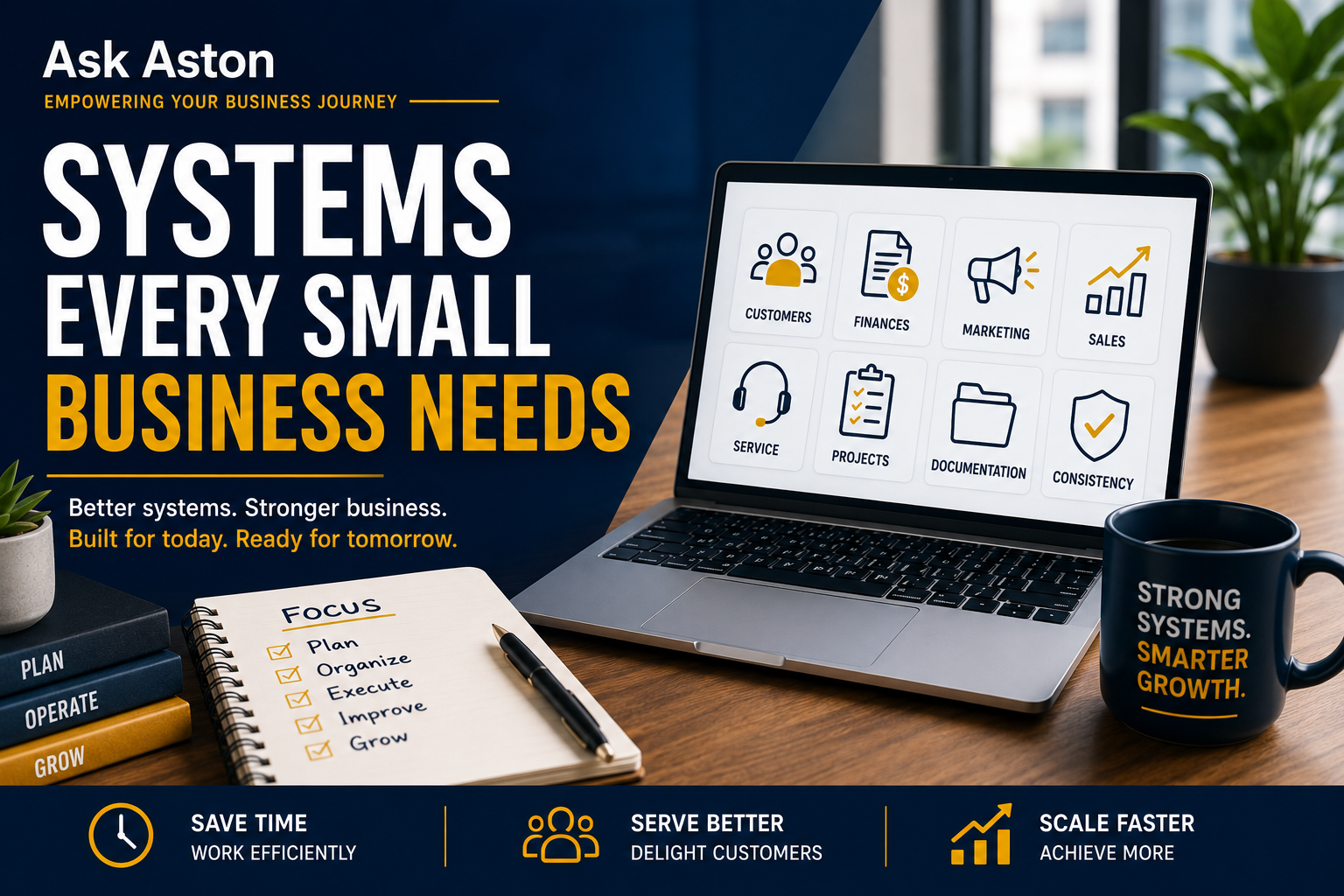
Many entrepreneurs start their businesses with passion, expertise, and a great idea. However, as the business grows, relying on memory and daily improvisation becomes increasingly difficult. Tasks get missed, customer service suffers, and productivity declines.
That is why successful businesses depend on systems. A system is a repeatable process that helps you complete tasks consistently and efficiently. Strong systems save time, reduce errors, and make growth easier to manage.
Fortunately, you do not need a large team or expensive software to build effective systems. Even simple processes can create significant improvements.
Why Systems Matter
Without systems, every task requires a new decision.
For example, you may handle customer inquiries differently each time, track expenses inconsistently, or forget important follow-up tasks. As a result, operations become less efficient and more stressful.
Systems create consistency and efficiency. Check out this article on efficient technology systems for businesses.
Additionally, they help you delegate work, train employees, and maintain quality as your business expands. Instead of constantly reinventing the wheel, you follow a proven process that produces reliable results.
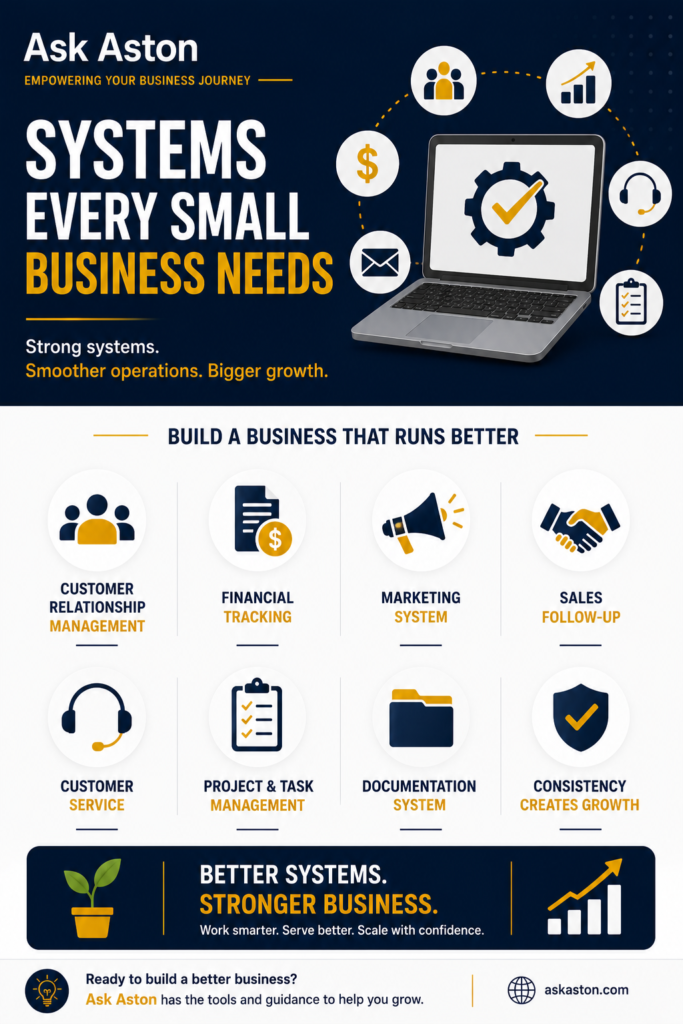
Customer Relationship Management System
Every business needs a way to manage customer information.
A customer relationship management (CRM) system helps you organize contacts, track conversations, schedule follow-ups, and monitor sales opportunities.
Even a simple CRM can improve communication and prevent leads from falling through the cracks.
Furthermore, organized customer data helps you provide better service and build stronger relationships over time.
When customers feel valued, they are more likely to return and refer others.
Financial Tracking System
Money management is critical for long-term success.
Therefore, every business should have a system for tracking income, expenses, invoices, and cash flow. Accurate records help you understand your financial position and make informed decisions.
Additionally, organized financial records simplify tax preparation and reduce costly mistakes.
Whether you use accounting software or spreadsheets, consistency matters more than complexity.
Review your finances regularly and keep records up to date.
Marketing System
Many business owners market their companies only when sales slow down. However, inconsistent marketing often produces inconsistent results.
Instead, create a marketing system that generates ongoing visibility.
For example, you might publish weekly content, schedule social media posts, send monthly email newsletters, and monitor advertising performance.
A structured approach helps maintain momentum and ensures marketing remains a priority.
As a result, you can attract new customers more consistently.
Sales Follow-Up System
Most prospects do not buy immediately.
In fact, many sales occur after multiple interactions. Therefore, businesses need a reliable follow-up process.
Your sales system should outline when to contact leads, how to communicate, and what information to provide at each stage of the buying journey.
Consistent follow-up increases trust and improves conversion rates.
Moreover, it helps ensure valuable opportunities do not disappear simply because someone forgot to send an email or make a phone call.
Customer Service System
Great customer service rarely happens by accident.
Instead, successful businesses create processes that guide customer interactions. These systems may include response time standards, support procedures, and methods for handling complaints.
When customers receive prompt and professional service, they develop greater confidence in your business.
Consequently, customer satisfaction improves and loyalty increases.
Strong service systems also help maintain consistency as your team grows.
Project and Task Management System
As responsibilities increase, keeping track of tasks becomes more challenging.
A project management system helps organize priorities, deadlines, and responsibilities. It allows you to monitor progress and ensure important work gets completed on time.
Additionally, task management systems improve accountability.
Whether you use a digital tool or a simple checklist, having a central location for projects can dramatically improve productivity.
Documentation System
Many small business owners keep important knowledge in their heads.
While this may work initially, it creates problems when hiring employees or delegating responsibilities.
Documenting key processes allows others to follow the same procedures and maintain consistent results.
For example, create written instructions for onboarding customers, processing orders, handling support requests, and managing finances.
Documentation transforms individual knowledge into organizational knowledge.
Build Systems Before You Need Them
Many entrepreneurs wait until they feel overwhelmed before creating systems. Unfortunately, that approach often leads to frustration and inefficiency.
Instead, build systems early.
Start with the areas that consume the most time or create the most confusion. Then improve and refine your processes as the business grows.
The strongest businesses are not always the ones with the best ideas. Often, they are the ones with the best systems. By creating reliable processes for sales, marketing, customer service, finances, and operations, you can build a business that runs more smoothly and scales more effectively. Check out this article on free tools every new business owner should know.
Need help building systems and creating a business plan?
Try Ask Aston to brainstorm ideas, validate opportunities, create business plans, and get step-by-step guidance tailored to your goals.