A sales funnel is a model that shows the journey potential customers take before making a purchase. It helps business owners understand how people move from discovering a business to becoming paying customers.
Many entrepreneurs focus heavily on generating traffic. However, traffic alone does not create sales. A sales funnel helps guide prospects through a process that builds trust, answers questions, and encourages action.
Whether you run an online business, a local service company, or an e-commerce store, understanding sales funnels can improve your marketing and increase conversions.
Why Sales Funnels Matter
Most people do not buy the first time they encounter a business.
Instead, they often research options, compare competitors, read reviews, and gather information before making a decision. As a result, businesses need a system that nurtures potential customers throughout this process.
A sales funnel provides that system.
Rather than relying on luck, you create a structured path that moves people closer to a purchase. Furthermore, a well-designed funnel helps identify where prospects lose interest so you can improve your marketing efforts.
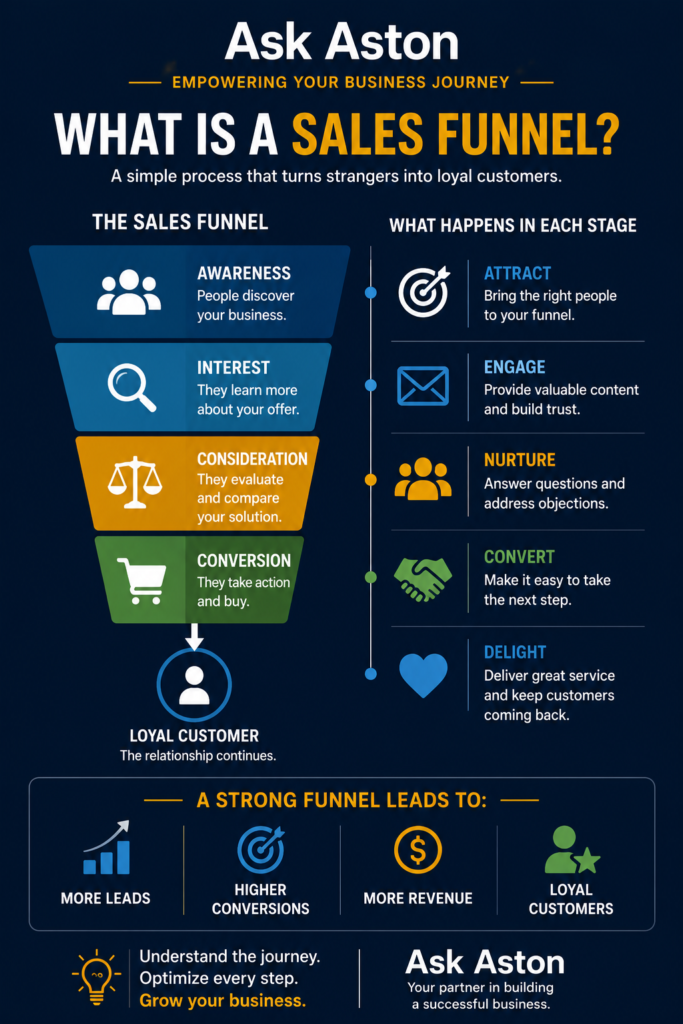
The Four Main Stages of a Sales Funnel
Although sales funnels vary by industry, most include four key stages.
Awareness
The awareness stage occurs when people first discover your business.
For example, they may find your website through a search engine, social media post, online advertisement, referral, or blog article. At this point, they recognize a problem or need but may not know much about your company.
Therefore, your goal is to attract attention and make a positive first impression.
Helpful content, educational articles, and engaging social media posts often perform well during this stage.
Interest
Once prospects become aware of your business, they move into the interest stage.
Here, they begin learning more about your products, services, or solutions. They may visit your website, subscribe to your email list, watch videos, or download resources.
As interest grows, trust becomes increasingly important.
Consequently, businesses should focus on providing value rather than immediately pushing for a sale. Helpful information often encourages prospects to continue exploring.
Consideration
During the consideration stage, prospects evaluate whether your solution fits their needs.
They may compare prices, review features, read testimonials, or research competitors. In many cases, customers weigh several options before making a decision.
Because buyers seek confidence, businesses should provide clear information, case studies, reviews, and examples of success.
The easier you make the evaluation process, the more likely prospects will continue moving forward.
Conversion
The conversion stage occurs when a prospect becomes a customer.
This is the point where someone makes a purchase, signs a contract, schedules a consultation, or takes another desired action.
However, conversion does not happen automatically. A confusing checkout process, unclear pricing, or poor communication can cause prospects to leave.
Therefore, businesses should remove obstacles and make it easy for customers to take the next step.
The Funnel Does Not End With a Sale
Many business owners think the funnel ends when a customer makes a purchase. However, successful companies continue building relationships after the sale.
Satisfied customers often return for additional purchases. Moreover, they may refer friends, leave positive reviews, and become advocates for your brand.
For this reason, many marketers include retention and loyalty activities as part of their overall funnel strategy.
Strong customer service can be just as important as strong marketing.
How to Improve Your Sales Funnel
Improving a sales funnel starts with understanding your audience.
First, identify your customers’ needs, questions, and concerns. Next, create content and offers that address those challenges. Then, monitor results and look for areas where prospects leave the process.
Additionally, test different headlines, calls to action, landing pages, and marketing messages. Small improvements can lead to significant gains over time.
Most importantly, focus on helping customers make informed decisions rather than pressuring them to buy.
Build a Funnel That Supports Growth
A sales funnel is more than a marketing concept. It is a framework that helps businesses attract attention, build trust, and generate revenue.
By understanding each stage of the customer journey, you can create a smoother experience that benefits both your business and your customers. Over time, a strong sales funnel can increase conversions, improve customer relationships, and support sustainable growth. For more information on customers, read this article on how to find your first customer.
Looking for more information on the sales funnel? Check out this article on high-converting sales funnels.
Need help creating a sales funnel for your startup?
Try Ask Aston to brainstorm ideas, validate opportunities, create business plans, and get step-by-step guidance tailored to your goals.