Many aspiring entrepreneurs believe they need investors to start a business. While outside funding can help some companies grow, it is not the only path to success. In fact, many successful businesses launched without venture capital, angel investors, or large loans.
Funding a startup yourself allows you to maintain ownership, control decision-making, and build your business at your own pace. Although this approach requires discipline and creativity, it can reduce financial pressure and help you focus on sustainable growth.
Here are several ways to fund a startup without investors.
Start With Personal Savings
Many entrepreneurs use personal savings to launch their businesses.
Using your own funds allows you to move quickly without seeking approval from lenders or investors. In addition, you retain full ownership of the company and keep all future profits.
However, it is important to invest carefully. Before spending money, create a budget and identify the expenses that are truly necessary. Focus on tools, services, and activities that directly support growth.
Starting small often helps entrepreneurs preserve cash while learning what customers actually need.
Launch a Minimum Viable Product
Instead of building a perfect product immediately, consider launching a Minimum Viable Product, or MVP.
An MVP includes only the core features needed to solve a customer problem. As a result, you can test demand without spending large amounts of money.
For example, a service business might begin with a simple website and a basic offering. Likewise, a software startup might launch with a limited feature set rather than a fully developed platform. Check out the link for more detailed information on minimum viable products.
By starting lean, you can gather feedback and generate revenue sooner.
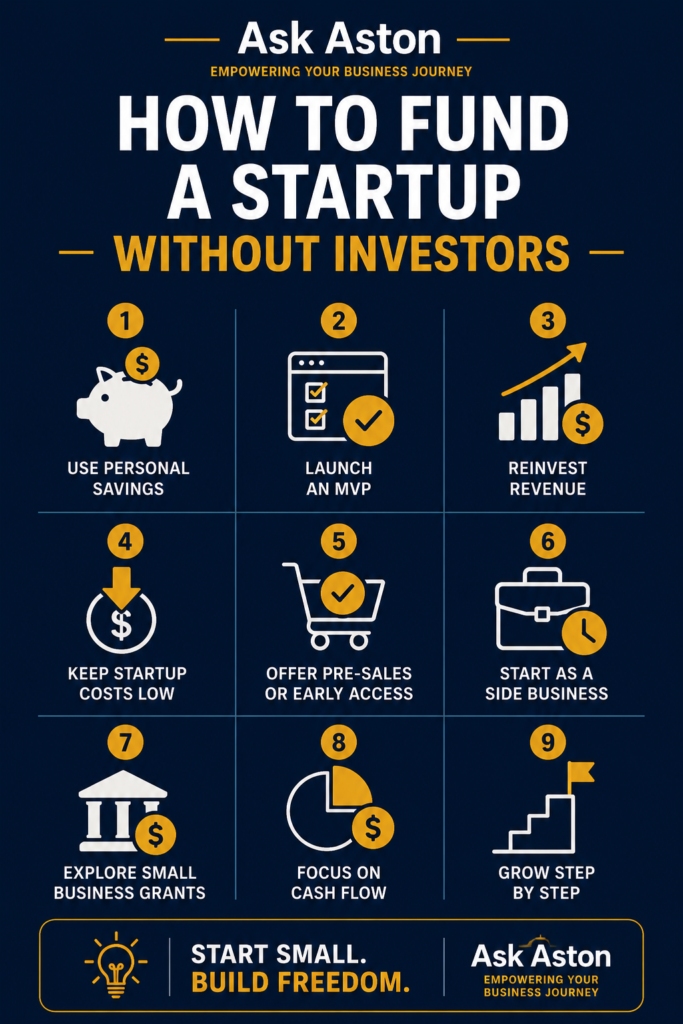
Use Revenue to Fund Growth
Many successful entrepreneurs bootstrap their businesses by reinvesting profits.
Rather than seeking outside funding, they use early sales to pay for future improvements, marketing efforts, and business expansion.
This strategy may require patience. However, it encourages smart spending and helps business owners focus on generating revenue from the beginning.
Even small amounts of income can support growth when used strategically.
Keep Startup Costs Low
One of the most effective funding strategies involves reducing expenses.
Today, many affordable tools help entrepreneurs build websites, create marketing materials, manage projects, and communicate with customers. As a result, businesses can operate efficiently without large investments.
Instead of purchasing expensive equipment or office space, look for low-cost alternatives. Work from home when possible, use free software tools, and avoid unnecessary spending.
Every dollar you save extends the amount of time you can operate before needing additional funding.
Offer Pre-Sales or Early Access
Some businesses generate startup capital before officially launching.
For example, entrepreneurs may offer pre-orders, early-access memberships, or discounted launch packages. Customers pay upfront, which provides cash that can help fund production, development, or marketing.
This approach offers another advantage as well. It validates customer demand before you invest significant time and money into your business.
If people are willing to buy early, you gain valuable confidence in your idea.
Start as a Side Business
Keeping a full-time job while building your business can reduce financial pressure.
A steady paycheck can cover personal expenses while startup revenue remains inside the business. Consequently, you may have more flexibility to grow at a sustainable pace.
Many successful entrepreneurs built their businesses during evenings and weekends before transitioning to full-time entrepreneurship.
This strategy allows you to test your idea while limiting financial risk.
Explore Small Business Grants
Although grants are competitive, they can provide valuable funding without giving up ownership.
Government agencies, nonprofit organizations, and private companies often offer grants to support entrepreneurs, startups, and small businesses. Some programs focus on specific industries, locations, or business owners. Click the link to see the small business grants page from the Small Business Association.
Research opportunities in your area and review eligibility requirements carefully. While grants may not cover every expense, they can provide helpful financial support during the early stages of growth.
Focus on Cash Flow
Funding a startup is not only about finding money. It is also about managing money effectively.
Track your income, monitor expenses, and review your cash flow regularly. Strong financial habits help entrepreneurs make better decisions and avoid unnecessary problems.
Furthermore, understanding your cash flow can help you identify opportunities to reinvest in the business and accelerate growth.
Build Your Business One Step at a Time
You do not need investors to build a successful startup. Many entrepreneurs launch businesses using personal savings, early revenue, pre-sales, and careful financial management.
The key is starting small, controlling expenses, and focusing on activities that generate value for customers. Over time, consistent effort and smart decisions can create meaningful growth without giving up ownership of your company.
Need help creating a startup funding plan?
Try Ask Aston to brainstorm ideas, validate opportunities, create business plans, and get step-by-step guidance tailored to your goals.