
Starting a business does not always require quitting your job or taking a major financial risk. In fact, many successful companies began as side businesses while their founders continued working full-time. Building a business on the side can provide extra income, valuable experience, and an opportunity to test an idea before committing to entrepreneurship full-time.
The key is choosing a business that can be managed around your work schedule and does not require a large upfront investment. Here are several businesses that are well-suited for aspiring entrepreneurs who still have a full-time job.
Freelance Services
Freelancing is one of the most accessible businesses to start while employed.
If you have skills in writing, graphic design, web development, marketing, bookkeeping, video editing, or consulting, you may be able to offer services to clients during evenings and weekends.
Freelance businesses often have low startup costs and can generate income quickly. As you build a client base, you can gradually increase your workload and potentially transition into full-time self-employment if desired.
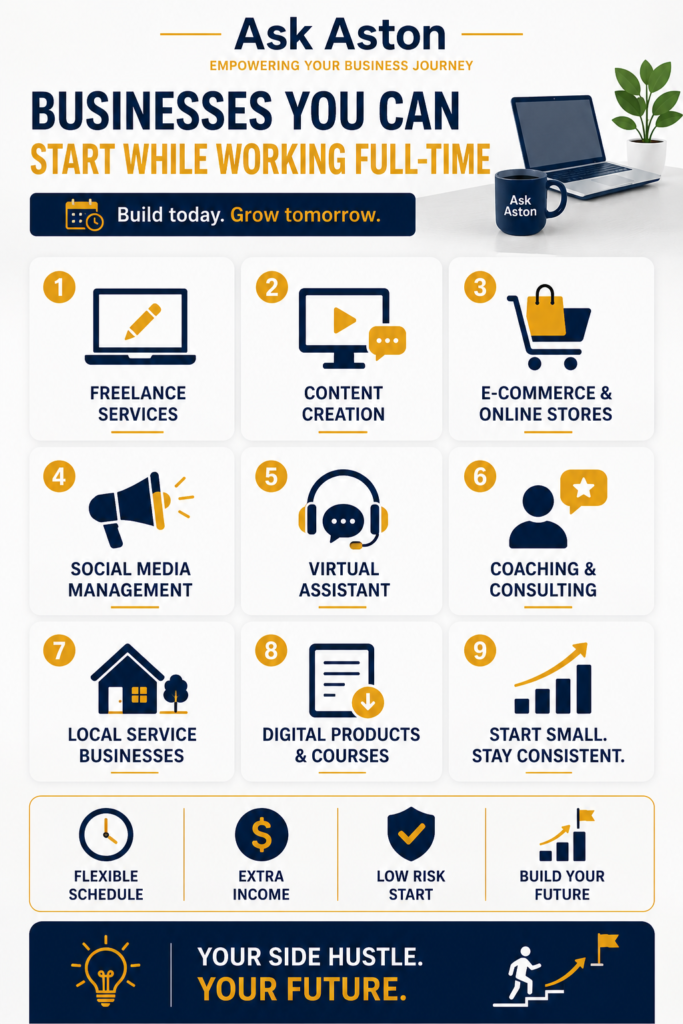
Online Content Creation
Content creation has become a popular side business for entrepreneurs with expertise or passion in a particular area.
You can create blog articles, YouTube videos, podcasts, newsletters, or social media content focused on topics that interest you. While building an audience takes time, content businesses can eventually generate revenue through advertising, sponsorships, affiliate marketing, and digital products.
The flexibility of content creation makes it ideal for people balancing a traditional job.
E-Commerce and Online Stores
Selling products online allows entrepreneurs to reach customers without opening a physical storefront.
Many people start online businesses selling handmade products, print-on-demand merchandise, digital downloads, or specialty retail items. Platforms such as Shopify, Etsy, and Amazon make it easier than ever to launch an online store.
Because orders can often be processed outside normal working hours, e-commerce businesses are a practical option for busy professionals.
Social Media Management
Many small businesses need help managing their social media presence but cannot afford a full-time marketing employee.
If you understand social media platforms and content strategy, you can offer services such as content creation, scheduling, engagement management, and advertising support.
This business can often be operated remotely and outside of standard business hours, making it a strong side-business opportunity.
Virtual Assistant Services
Entrepreneurs and small business owners frequently need administrative support but may not require a full-time employee.
Virtual assistants help with scheduling, email management, customer support, data entry, research, and other administrative tasks.
Because much of the work can be completed remotely and on a flexible schedule, virtual assistant services can fit well alongside full-time employment.
Online Coaching and Consulting
If you have professional expertise in a specific field, coaching or consulting may be a profitable business opportunity.
Business professionals, fitness experts, career coaches, financial advisors, and industry specialists often provide guidance through virtual meetings and online programs.
Many coaching sessions can be scheduled during evenings or weekends, allowing entrepreneurs to serve clients while maintaining their regular jobs.
Local Service Businesses
Certain local service businesses can be operated outside standard work hours.
Examples include:
- Pet sitting
- Dog walking
- Lawn care
- Pressure washing
- House cleaning
- Mobile car detailing
These businesses often require relatively low startup costs and can generate income quickly. Many clients are available during evenings and weekends, making scheduling easier for someone working a traditional job. Click the link if you would like more ideas on starting a small local services business.
Digital Products and Courses
Digital products can provide an attractive business model because they can be created once and sold repeatedly.
Examples include templates, guides, workbooks, spreadsheets, online courses, and educational resources.
While creating the product requires effort upfront, ongoing maintenance is often minimal. This allows entrepreneurs to build a business that is less dependent on trading time directly for money.
Start Small and Stay Consistent
One of the biggest mistakes aspiring entrepreneurs make is trying to build a large business too quickly.
Starting small allows you to learn, test your idea, and reduce financial risk. Even a few hours per week can lead to meaningful progress when applied consistently over time.
Focus on building systems, serving customers well, and gradually expanding as revenue grows.
Your Full-Time Job Can Support Your Entrepreneurial Journey
Working full-time does not prevent you from becoming an entrepreneur. In many cases, your job can provide financial stability while you develop your business.
By choosing a flexible business model and dedicating consistent effort, you can begin building an additional income stream and gain valuable entrepreneurial experience without immediately leaving your current position.
Many successful business owners started exactly this way. The key is taking the first step and remaining committed to steady progress over time. To learn more about these topics read about what successful entrepreneurs do differently and common mistakes new entrepreneurs make.
Need help choosing the right business idea?
Try Ask Aston to brainstorm ideas, validate opportunities, create business plans, and get step-by-step guidance tailored to your goals.