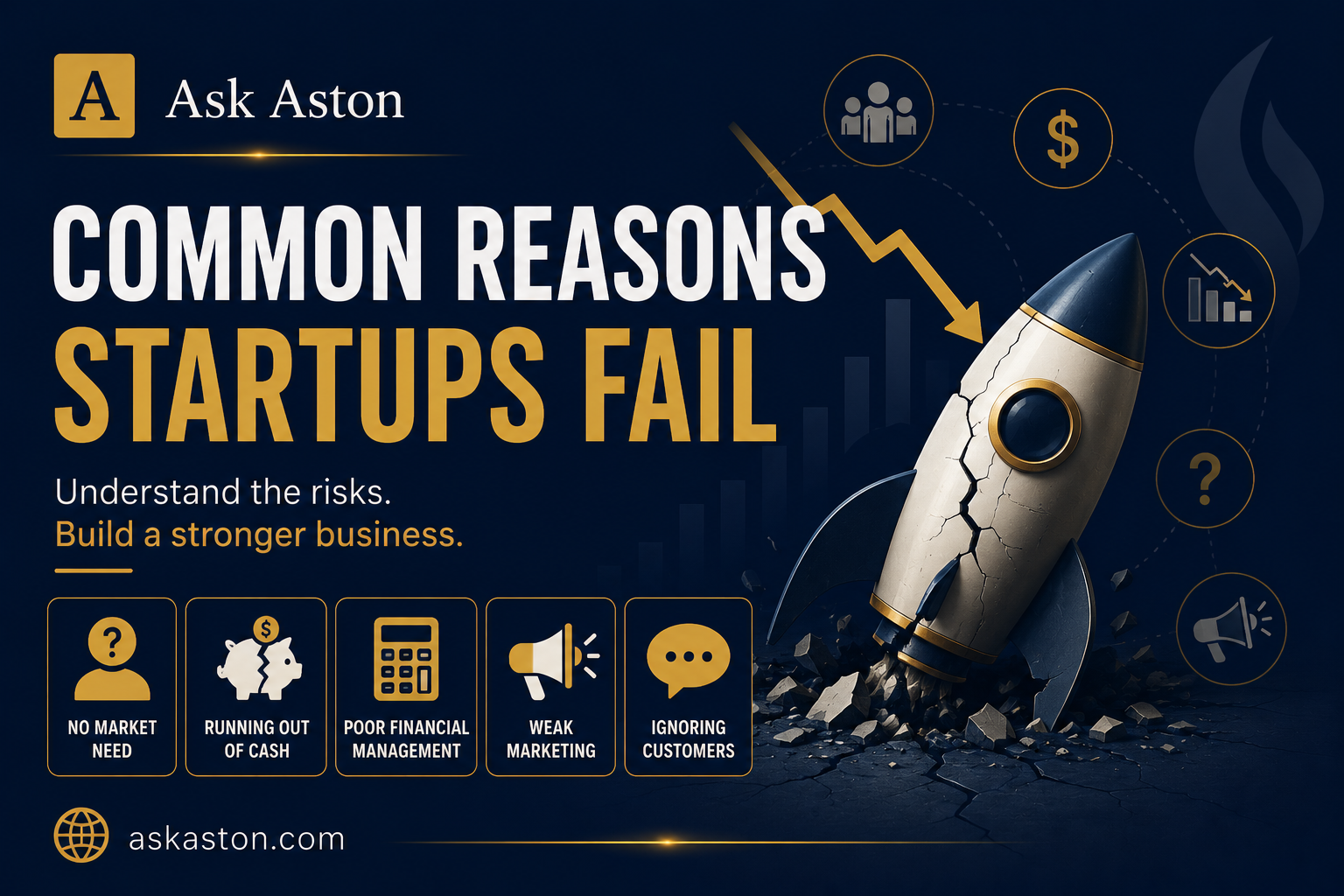
Starting a business is exciting, but success rarely happens by chance. Every year, thousands of startups launch with great ideas and motivated founders. Unfortunately, many never make it beyond the first few years. While every business faces unique challenges, most failures happen for a handful of common reasons.
The good news is that many of these mistakes are preventable. By understanding the risks early, you can make better decisions and improve your chances of building a successful business.
There Is No Real Market Need
Many startups fail because they create products that customers simply do not need. An idea may sound exciting, but enthusiasm alone does not create demand.
Before investing significant time or money, talk to potential customers. Ask about their problems, current solutions, and willingness to pay. Then, use that feedback to refine your idea before launching.
Successful businesses solve real problems for real people.

Running Out of Cash
Cash flow is the lifeblood of every startup. Even profitable businesses can fail if they run out of money before customers begin paying consistently.
Many founders underestimate startup costs or overestimate early sales. As a result, they spend too much on equipment, office space, or marketing before generating reliable revenue.
Create a realistic budget, monitor expenses carefully, and keep enough cash in reserve to handle unexpected challenges.
Poor Financial Management
Generating revenue is only part of running a successful business. You also need to understand your financial numbers.
Many entrepreneurs fail because they ignore profit margins, pricing, taxes, or operating expenses. Without accurate financial records, it becomes difficult to make informed decisions.
Review your financial statements regularly. Knowing where your money comes from and where it goes helps you avoid costly surprises. For more information on financial management for your business, click the link.
Weak Marketing
A great product cannot succeed if no one knows it exists. Many startups spend months developing their product but very little time promoting it.
Instead, create a marketing plan before launching. Identify your ideal customer, choose the right marketing channels, and communicate the value your business provides.
Marketing should be an ongoing effort, not a one-time event. For more information on marketing for your business, read this article.
Ignoring Customer Feedback
Customers often provide valuable insights about your product or service. However, some founders become so attached to their original vision that they ignore helpful feedback.
Listen carefully to what customers say. Notice the questions they ask, the features they request, and the problems they experience. Then, make improvements based on what you learn.
Businesses that adapt to customer needs often outperform those that refuse to change.
Growing Too Quickly
Growth is exciting, but expanding too fast can create serious problems. Hiring employees, leasing larger facilities, or introducing new products before your business is ready can strain your finances.
Instead, focus on building strong systems and consistent revenue first. Once your operations run smoothly, you can grow with greater confidence.
Steady growth is usually more sustainable than rapid expansion.
Choosing the Wrong Team
Even the best business idea depends on the people behind it. Poor communication, unclear responsibilities, or disagreements among founders can slow progress and damage the company.
Choose business partners and employees who share your values and complement your skills. In addition, define roles clearly and communicate openly as your business grows.
Strong teams solve problems more effectively than individuals working alone.
Failing to Adapt
Markets change constantly. Customer preferences evolve, competitors introduce new products, and technology creates new opportunities.
Businesses that refuse to adapt often lose customers over time. On the other hand, successful entrepreneurs monitor trends, test new ideas, and adjust when necessary.
A willingness to learn and improve is one of the greatest strengths a startup can have.
Final Thoughts
Startup failure is common, but it is not inevitable. Most successful entrepreneurs encounter setbacks along the way and use those experiences to build stronger businesses. By validating your idea, managing your finances, listening to customers, and staying flexible, you can avoid many of the mistakes that cause startups to fail.
Building a successful company takes persistence, planning, and continuous learning. Every challenge is an opportunity to improve your business. With the right mindset and a willingness to adapt, you can give your startup the best possible chance for long-term success.
Need help building a successful company?
Try Ask Aston to brainstorm ideas, validate opportunities, create business plans, and get step-by-step guidance tailored to your goals.