
Starting a business takes courage, commitment, and plenty of hard work. However, even the best business ideas do not always work exactly as planned. Successful entrepreneurs know that changing direction is sometimes the smartest decision they can make. A business pivot is not about giving up. Instead, it means adjusting your strategy to better meet customer needs and market demand.
Knowing when to pivot can help you save time, reduce financial risk, and build a stronger company. Here are several signs that it may be time to rethink your original business idea.
Your Customers Are Not Buying
One of the clearest signs that you should pivot is a lack of customer interest. You may receive positive feedback from friends or family, but that does not always lead to sales. If people consistently visit your website, ask questions, or request demonstrations without making purchases, something is missing.
First, examine your pricing, marketing, and customer experience. If those areas seem solid but sales remain low, your core offering may not solve an important problem. In that case, consider changing your product, target audience, or overall business model.
Listening to customer feedback can reveal opportunities you had not considered before.
Customers Want Something Different
Sometimes customers show interest, but they ask for features or services you never planned to offer. Although these requests may seem unrelated to your original vision, they often point toward a better opportunity.
For example, a company that develops scheduling software may discover that customers care more about reporting tools than scheduling itself. Rather than ignoring this feedback, the business could shift its focus toward the feature customers value most.
Successful businesses solve real problems. Therefore, customer demand should play a major role in shaping your direction. To read more about finding and keeping customers, click the article linked.
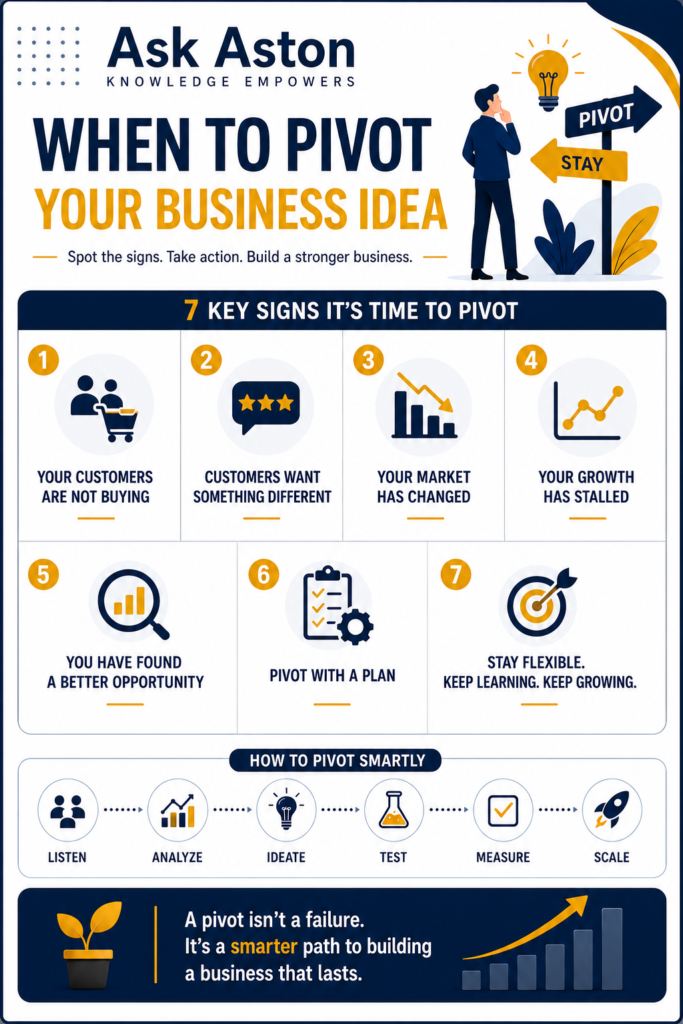
Your Market Has Changed
Markets rarely stay the same for long. New technology, economic conditions, regulations, and competitors can quickly change customer behavior. As a result, a business idea that looked promising a year ago may struggle today.
Instead of fighting market changes, look for ways to adapt. You may need to serve a different customer group, offer new services, or deliver your product in a new way.
Businesses that respond quickly often gain an advantage while competitors continue using outdated strategies.
Your Growth Has Stalled
Every business experiences slow periods. However, if your revenue has stopped growing despite consistent marketing and sales efforts, you should investigate the cause.
Review your business metrics carefully. Look at customer acquisition costs, repeat purchases, profit margins, and customer retention. These numbers often reveal whether your current approach still works.
If your data shows little improvement over time, a pivot may help you unlock new growth opportunities.
You Have Found a Better Opportunity
Many successful companies became successful because they recognized a stronger opportunity than the one they originally pursued. While building your business, you will learn more about your customers, competitors, and industry than you knew at the beginning.
As you gather experience, you may discover a market with greater demand or less competition. If the new opportunity aligns with your strengths, changing direction can become a strategic decision rather than a desperate one.
Growth often comes from staying flexible instead of remaining tied to your first idea.
Pivot with a Plan
A pivot should never happen on impulse. Before making major changes, collect customer feedback, study your financial data, and research your market. Then, test your new direction on a small scale before committing significant time or money.
For example, you could launch a limited version of a new product, target a different audience with a marketing campaign, or introduce a new service to existing customers. These smaller experiments reduce risk while providing valuable information.
Most importantly, measure the results carefully and continue making improvements based on real customer behavior. If you would like more to read, check out this article on market research and competitive analysis.
Final Thoughts
Every successful entrepreneur faces unexpected challenges. The difference is that experienced founders treat setbacks as learning opportunities instead of failures. A thoughtful pivot allows you to respond to customer needs, changing markets, and new opportunities with confidence.
Changing direction does not mean your original idea failed. Instead, it shows that you are building a business based on evidence rather than assumptions. By staying flexible, listening to your customers, and making informed decisions, you give your business the best chance to grow over the long term.
Need help pivoting your buisness idea?
Try Ask Aston to brainstorm ideas, validate opportunities, create business plans, and get step-by-step guidance tailored to your goals.