
Hiring your first employee is one of the biggest milestones in any business. It signals growth, creates new opportunities, and allows you to focus on higher-value activities. However, hiring too soon can strain your finances, while waiting too long can limit growth.
So how do you know when the time is right?
The answer depends on your workload, finances, and long-term goals. By recognizing the right signs, you can make a smart hiring decision that supports sustainable growth.
Why Hiring Matters
Many entrepreneurs start by doing everything themselves. They handle sales, marketing, customer service, bookkeeping, and operations.
At first, this approach makes sense. It helps keep costs low while the business gains traction. However, as demand increases, managing every task becomes more difficult.
Eventually, your time becomes the most limited resource in the business.
Therefore, hiring can help you serve more customers, improve efficiency, and create room for growth.
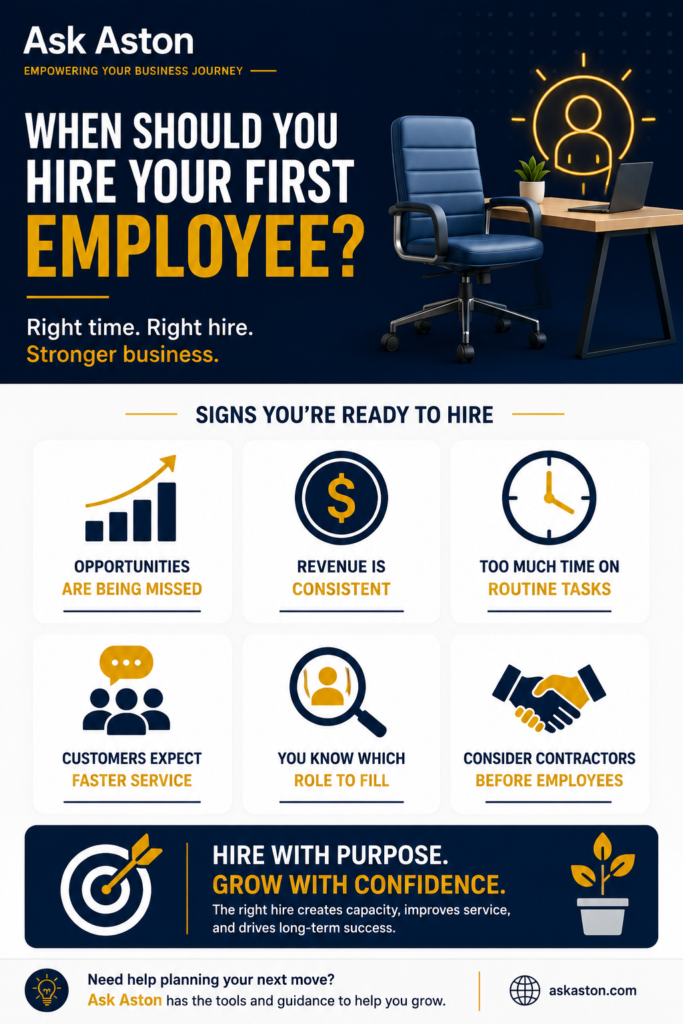
You Are Turning Away Opportunities
One of the clearest signs that you need help is when you start missing opportunities.
For example, you may struggle to respond to customer inquiries, delay projects, or decline new business because your schedule is already full. As a result, potential revenue slips away.
If your workload consistently exceeds your available time, an employee may help you capture opportunities that would otherwise be lost.
Growth often requires additional capacity.
Revenue Is Consistent
Before hiring, your business should demonstrate stable revenue.
A few strong months may feel encouraging. However, hiring creates an ongoing financial commitment. In addition to wages, you may need to cover payroll taxes, training expenses, software licenses, and other costs. If you are curious about payroll costs and hiring, click the link for more info.
Therefore, look for consistent income rather than temporary spikes.
When your revenue supports additional payroll without creating financial stress, hiring becomes much less risky.
You Spend Too Much Time on Routine Tasks
Many business owners become trapped in low-value activities.
Administrative work, scheduling, customer support, and data entry are important tasks. However, they may prevent you from focusing on sales, strategy, and business development.
Ask yourself where your time creates the greatest value.
If routine work consumes most of your day, hiring support can free you to focus on activities that generate growth.
Consequently, your business may expand faster than it could with a one-person operation.
Customers Expect Faster Service
Customer expectations continue to rise.
People expect quick responses, fast delivery, and reliable communication. If customers regularly wait too long for assistance, your reputation can suffer.
Furthermore, delayed service can reduce customer satisfaction and limit referrals.
Hiring additional help allows you to maintain quality while serving a larger number of customers.
In many cases, excellent service becomes a competitive advantage.
Know Which Role to Fill First
Not every first hire should look the same.
The best first employee solves your biggest bottleneck.
For example, a service business may benefit from hiring another technician or specialist. On the other hand, an online business may need administrative support or customer service assistance.
Before hiring, identify the tasks that consume the most time or create the greatest frustration.
Then focus on finding someone who can handle those responsibilities effectively.
Consider Contractors Before Employees
In some situations, hiring a contractor may make more sense than hiring a full-time employee.
Contractors can provide specialized skills without the long-term commitment of traditional employment. Additionally, they offer flexibility while your business continues to grow.
For example, you might outsource bookkeeping, graphic design, marketing, or web development.
This approach allows you to expand capacity while managing costs carefully.
As your workload becomes more predictable, a permanent employee may become the better option.
Prepare Before You Hire
Hiring should never happen simply because you feel overwhelmed.
Instead, create a plan before bringing someone on board.
Document job responsibilities, establish performance expectations, and create a realistic budget. Additionally, think about training and onboarding. A clear process helps new employees become productive more quickly.
Preparation increases the chances of a successful hire.
Make Hiring a Growth Decision
Your first employee is more than an extra set of hands. It is an investment in the future of your business.
When revenue is stable, opportunities are increasing, and your workload limits growth, hiring may be the right next step. By planning carefully and filling the right role, you can create capacity, improve customer service, and position your business for long-term success.
Need help planning your business growth strategy?
Try Ask Aston to brainstorm ideas, validate opportunities, create business plans, and get step-by-step guidance tailored to your goals.